















MUNEEB AHMED, QADIAN
On the late morning of 19 November 1863, as the chilly winds of autumn swept through a nation divided by war, thousands gathered at the dedication of the Soldiers’ National Cemetery in Gettysburg, Pennsylvania. There, Abraham Lincoln, President of the United States and commander-in-chief of the Union army, rose before a crowd of fifteen thousand and began with the words:
“Four score and seven years ago our fathers brought forth on this continent, a new nation, conceived in Liberty, and dedicated to the proposition that all men are created equal.”[1]
This speech paved the way for the Thirteenth Amendment to the United States Constitution, ratified on 6 December 1865, which abolished slavery in the “land of the free”.
Worldly abolition movements
It should be noted, however, that when the question of slavery and its abolition is examined under the lens of history, this is not the only instance of emancipation on a large scale. Across centuries and continents, slavery has been challenged, restrained, and in many cases abolished through law or revolution.
In 1794, revolutionary France abolished slavery across its empire and granted citizenship to formerly enslaved people. In 1804, Haiti emerged from a slave revolution, where enslaved people acquired freedom through sovereignty. In 1833, the British Empire passed the Slavery Abolition Act, freeing enslaved people across its colonies.
Yet, none of these attempts were comprehensive or flawless, as they either granted freedom without full civil, economic, or political rights, as in the cases of France and Britain,[2] or involved the loss of human lives on a massive scale, as in Haiti.[3]
Even the 13th Amendment had its limitations—both in its framework and execution. The United States abolished slavery only after a prolonged conflict that devastated its economy and infrastructure. When the Emancipation Proclamation was enshrined as a constitutional amendment on 13 January 1865, more than four million African Americans were suddenly freed. This abrupt transition left an entire community—who had lived their whole lives as property—collectively homeless, without resources, and socially vulnerable.[4]
Moreover, legal emancipation did not automatically translate into economic independence. Most of the Black population was left without property, financial resources, or even recognised status in society. Their social capital was negligible, and many white employers exploited this helplessness by extracting labour for little or no pay. These structural gaps allowed systems of racial control, especially the Jim Crow laws, to persist for around a century following the Emancipation.[5]
In fact, the legacy of these inhumane systems continues to influence patterns of inequality and marginalisation in the United States even today. Despite constituting about 13 percent of the US population, African Americans make up over 40 percent of the homeless population.[6] As of 2023, around 18 percent of Black Americans—in contrast to around 10 percent of the general population—live below the official poverty line.[7] In 2024, over 25 percent of Black children were in poverty compared to around 8 percent of non-Hispanic white children.[8]
Likewise, they also face systemic barriers in housing, education, employment, and justice. The persistence of black neighbourhoods, voter suppression, educational inequality, systemic racism, and residential segregation are modern manifestations of this historic injustice.
In short, the Emancipation Proclamation—generally seen as a landmark in advancing human dignity—nonetheless lacked the mechanisms to ensure true social, economic, and political equality.
Across the sands of time
Now, let us travel back roughly twelve centuries from Abraham Lincoln’s speech. There, another man stood atop Mount Arafah, in the modern-day Saudi Arabia, and addressed a gathering of over one hundred and twenty thousand people, declaring:
“All of you are from Adam, and Adam was from the ground. An Arab has no superiority over a non-Arab, nor a non-Arab over an Arab. A white has no superiority over a black, nor a black over a white—except by piety and good action.”[9]
In this momentous speech, the Holy Founder of Islam, Prophet Muhammadsa, proclaimed the politics of equality, which cut across race, ethnicity and lineage. The sermon reflected the holistic stance of Islam against all forms of human domination, including slavery, which has been clearly expressed in the unambiguous rejection of any superiority based on race or origin.
Yet, Islam is widely misunderstood as condoning slavery, largely because it did not abolish the institution through a single decree. The absence of a sudden prohibition is often wrongly interpreted as approval. However, as discussed in earlier historical examples, such an abrupt method of abolition, without addressing the prevailing social and moral conditions, has proven to be disruptive or even counterproductive. In contrast, Islam adopted a gradual approach that sought to eliminate the practice while also exercising caution regarding the human and societal costs of this radical social transformation.
Islam’s holistic framework for emancipation
Islam’s method for addressing slavery fundamentally consisted of two steps. The first was the outright prohibition of the practice of enslavement itself. In this regard, the Holy Prophetsa unequivocally forbade the enslavement of free individuals. He stated:
“Allah the Almighty says, ‘there are three types of people against whom I shall contend on the Day of Resurrection: first, a person who makes a covenant in My name and then breaks it; second, a person who enslaves a free individual, sells him, and consumes his price; and third, a person who employs a worker, benefits from his labour, but does not pay him his wages.’”[10]
It must be noted that this first step was immediate and absolute, leaving no room for gradualism: the enslavement of free persons was categorically forbidden.
The second step focused on the safe, ethical, and effective manumission of those already enslaved. It is in this phase that Islam adopted a careful and gradual approach. This process included both recommendatory and mandatory measures for freeing slaves. Muslims were repeatedly encouraged to emancipate slaves as an act of moral excellence and spiritual merit.
The Holy Quran states:
“And We showed him two ascending paths of nobility. But he did not follow the path of ‘Aqabah’. And what should make you know what the ‘Aqabah’ is? [It is] the freeing of a slave.”[11]
At the same time, Islam also prescribed manumission as a compulsory obligation in numerous circumstances.[12]
Alongside these measures that ensured the safe and gradual emancipation of existing slaves, Islam laid strong emphasis on the humane treatment of slaves. It commanded respect, brotherhood, and equality, and strongly questioned the moral legitimacy of one human being exercising domination over another. This was vividly reflected in the lived example of the Holy Prophetsa and his companions.
Hazrat Abu Mas’udra relates:
“Once, while I was chastising my slave, I heard a voice behind me saying, ‘Abu Masood, what are you doing?’ Being enraged, I did not recognise the voice and continued. The voice drew nearer, and when I turned, I saw the Holy Prophetsa rapidly advancing towards me, saying, ‘Abu Masood, what are you doing?’ At once, my stick dropped from my hand. The Prophetsa cast an angry look at me and said, ‘Do you not know there is God above you, Who has far greater power over you than you have over your slave?’ I replied, ‘O Messenger of God, forgive me, I have set this slave free for Allah’s sake.’ The Prophet said, ‘If you had not done so, the fire of Hell would have scorched your face.’”[13]
In another instance, Abu Nawar, a cloth merchant, recounts:
“Alira, son of Abu Talib (the fourth Caliph), once came to me with a slave and purchased two linen shirts. He then said to his slave, ‘Choose whichever of the two you prefer.’ The slave chose one, and Alira wore the other.”[14]
In the face of such clear teachings and practices, it is sheer injustice to allege that Islam supports slavery. No honest person can make such a claim.
Freedom beyond legislations
American slavery was fundamentally a racial issue, and Abraham Lincoln approached it from that perspective. In India, untouchability and bonded servitude were primarily caste-based, and Dr B. R. Ambedkar sought reform from the standpoint of the marginalised classes. In parts of Africa, the trokosi system of enslaving young women reflected gender inequality, and reformers such as Mark Wisdom raised their voices against it.
But at the inception of Islam, slavery was not tied to race, caste, or gender—it was a matter of human ownership and the denial of individual sovereignty. Islam addressed this issue in the most humane and just way possible.
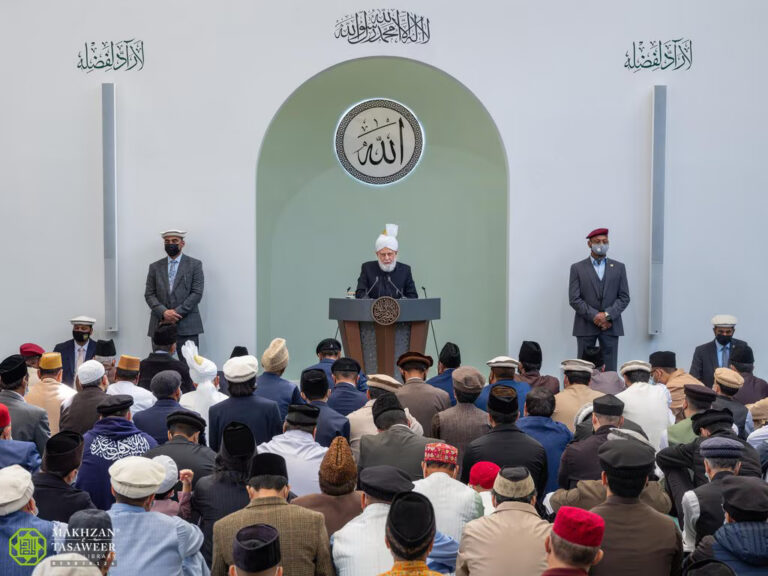
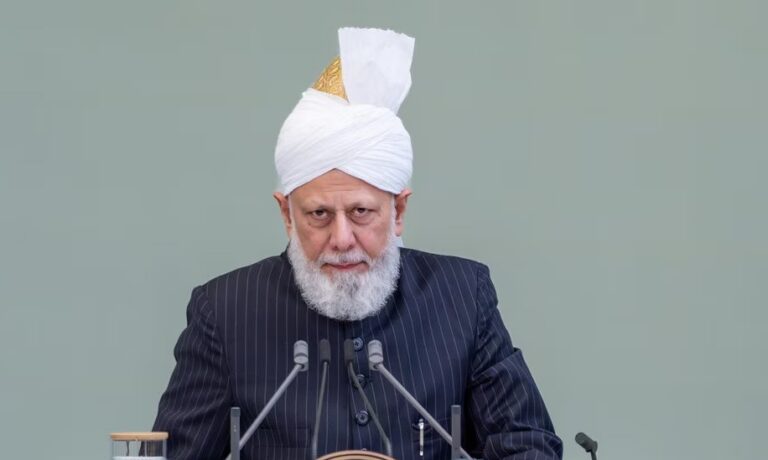
The Worldwide Head and the Fifth Caliph of the Ahmadiyya Muslim Community, Hazrat Mirza Masroor Ahmadaba states:
“Islam teaches Muslims to free all persons and all nations from all kinds of slavery and servitude—whether physical, economic, or social.”[15]
Muneeb Ahmed is an undergraduate physics student.
END NOTES
[1] The Gettysburg Address, Abraham Lincoln, 19 November 1863, Library of Congress
[2] French abolition was fragile and incomplete. As Laurent Dubois shows in A Colony of Citizens (2004), colonial administrators enforced new forms of coercion—including forced labour regimes, restricted mobility, and persistent racial hierarchies—leaving newly freed people struggling for genuine freedom. Likewise, British emancipation abolished legal slavery but imposed an apprenticeship system and withheld land, suffrage, and economic independence, thereby restricting the substantive freedom of the formerly enslaved, as David Brion Davis explains in The Problem of Freedom (1992).
[3] The Haitian Revolution claimed an estimated 200,000–300,000 lives through warfare, disease, and reprisals, affecting enslaved people, colonists, and foreign armies alike, as detailed by Laurent Dubois in Avengers of the New World (2004)
[4] Sick from Freedom: African-American Illness and Suffering during the Civil War and Reconstruction, Jim Downs, Oxford University Press, New York (2012)
[5] The Strange Career of Jim Crow, C. Vann Woodward, Oxford University Press, New York (1955)
[6] Racial Disparities in Homelessness in the United States, 6 June 2018, National Alliance to End Homelessness
[7] Poverty in the United States 2024, a report by the United States Census Bureau, p. 19
[8] Ibid, p. 26
[9] Sharh al-Aqeeda at-Tahawiyya, Ibn Abi al-Izz, v. 2, p. 510
[10] Sahih al-Bukhari, Kitab al-Itq (the Book on Manumission of Slaves)
[11] Holy Quran 90:11–14
[12] Holy Quran 4:93, 5:90, 58:4
[13] Sahih Muslim, Kitab al-Iman (The Book on Faith)
[14] Usd al-Ghaba fi Ma’rifat as-Sahabahh by Ibn al-Athir, v. 3, p. 559, under Ali ibn Abi Talib
[15] Islam: A Threat or a Source of Peace, address to guests at Jalsa Salana (Annual Convention) Germany 2014
0 Comments