













IHSAN ALI, QADIAN
So far, this year has witnessed no change in the world’s relentless drift towards global instability—except for the worse.
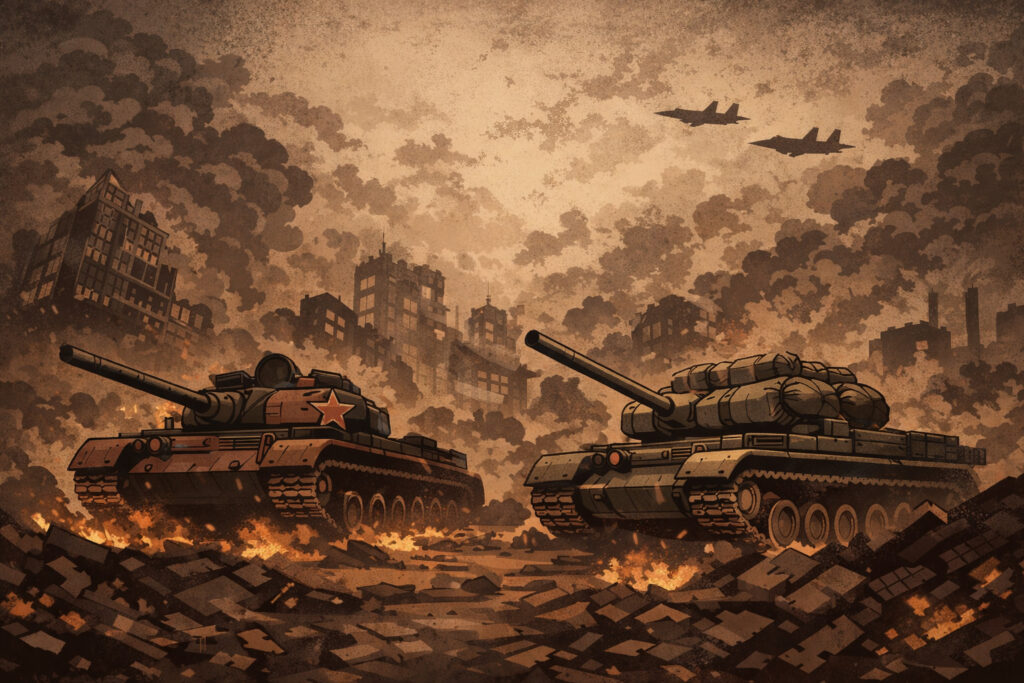
Earlier this month, on 4 February, the New START Treaty—the last remaining framework limiting strategic nuclear weapons between the United States and Russia—came to an end. Even more alarming, on Saturday, 28 February, the US and Israel launched coordinated military attacks on Iran, prompting immediate retaliatory strikes from Tehran.
The exchange has since set off a dramatic turn of events, pushing the region—and potentially the whole world—to the brink of a global conflict. This underscores the need for other nations to take steps to prevent further escalation and pursue a diplomatic resolution.
Why peace abroad matters
Many think that working for peace in another country is like watering the neighbour’s plants—something noble perhaps, but unnecessary and unrelated to one’s own security and interests. After all, why should we worry about conflicts elsewhere when we have enough problems at home?
In today’s interconnected world, this thinking is deeply flawed. Conflict and injustice do not remain confined within national borders. A war in one part of the world quickly affects others through rising fuel prices, economic instability, refugee movements, food insecurity, climate stress, and global political uncertainty.
For a country like India—deeply integrated into global trade, diplomacy, and security—peace elsewhere is not optional; it is essential. The worsening international climate is more than enough for us to recognise the urgency of acting decisively in safeguarding regional and global stability.
For the past decade, the world has been edging dangerously close to catastrophe. One widely referenced scientific assessment (Doomsday Clock) now places humanity just seconds away from symbolic midnight, closer than ever before in its history. Such warnings are not rhetorical devices; they reflect accumulated risks arising from nuclear weapons, geopolitical instability, and the steady erosion of global restraint mechanisms.
The recent escalations have further exacerbated the situation, placing the world in one of its most dangerous phases since the Cold War. On one hand, the gradual dismantling of nuclear arms control agreements between major powers has significantly increased the risk of a catastrophic conflict. With the expiry of the New START Treaty, the world has entered an era in which there are no legally binding constraints on the two largest nuclear arsenals. Coupled with this is the continued irresponsibility of major powers in resorting to military confrontation rather than pursuing diplomatic solutions—an approach that is steadily disturbing the fragile balance of global security.
The unthinkable reality
Collectively, these trends indicate that a wider global conflict could, in all probability, escalate into a nuclear confrontation.
Nuclear war is fundamentally different from conventional warfare. Its consequences are not limited to destroyed cities or immediate casualties. Radiation contaminates land, water, and air, rendering vast areas uninhabitable. Agricultural systems collapse, food chains are disrupted, and long-term health crises emerge. Even regions far from the conflict zones suffer through environmental damage, economic shockwaves, and global instability.
The most disturbing consequence lies in what nuclear war does to the future of humanity. Radiation exposure damages genetic material, increasing the likelihood of severe physical and developmental impairments in children born long after the conflict has ended. If humanity fails to act with justice and restraint, the most tragic price will be paid not by today’s leaders, but by innocent lives yet to be born. Future generations will be born disabled—not because of fate, but because of human irresponsibility.
For India, a country with a young population and a strong focus on development, these realities should be deeply concerning. Any global nuclear conflict would directly affect India’s economy, food security, climate patterns, and public health systems. Global recession, shortages of essential resources, and rising health burdens would disproportionately impact developing nations, even if they are not directly involved in the conflict.
There is also a moral dimension to this crisis. Scientific advancement without ethical responsibility becomes a threat rather than a benefit. Weapons created in the name of national security now endanger the survival of civilisation itself. History shows that meaningful progress in arms control has often come when leaders were forced to confront the human cost of nuclear war—not just its strategic implications.
Before it’s too late
Historically, India has advocated dialogue, restraint, and multilateral cooperation in global affairs. In the present global climate, these principles are not idealistic positions but urgent necessities. Preventing a nuclear catastrophe requires fairness in international relations, sincere dialogue among rival powers, and a willingness to place humanity above narrow national interests. In an interconnected world, putting out the neighbour’s fire is not an act of charity—it is an act of self-preservation.
Peace is not sustained through fear, but through justice, trust, and moral clarity. If the present generation fails to act responsibly, future generations will not judge us by our technological progress or political power, but by the disabled lives we leave behind as our legacy. The warning signs are unmistakable. The choice before the world—and India as a responsible global voice—is to act wisely now, before the path to destruction becomes impossible to reverse.
1 Comment
Shafeeq Ahmed · March 2, 2026 at 2:43 am
As the conflict enters its third day, the situation remains extraordinarily fluid and dangerous. Israel’s military chief has warned that “many more days of combat lie ahead.” The world now watches to see if Iran’s leadership can stabilize, whether Hezbollah or Iran’s allies—such as Russia or China—might enter the conflict and dramatically widen the war, and if any diplomatic off-ramps can be found amidst the most severe crisis to hit the Middle East in decades. Global leaders should urgently work towards a solution to stop the war as early as possible and prevent the situation from escalating further.
Mr. Ehsan Ali has provided a comprehensive analysis of the consequences of the current situation, along with a detailed remedial plan to address the crisis.