













Women play many roles in the lives of many—from being the hands that nourish and the minds that teach, to the ones who lead. Women influence the world in ways that are often immeasurable.
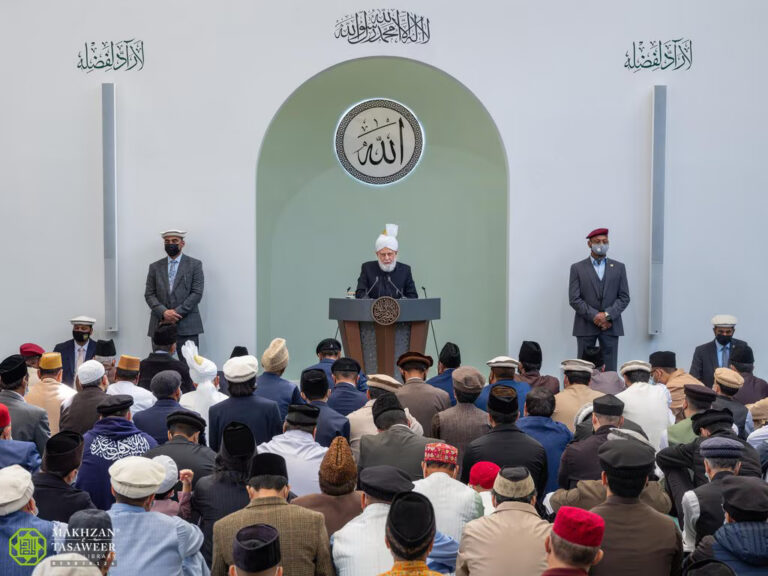
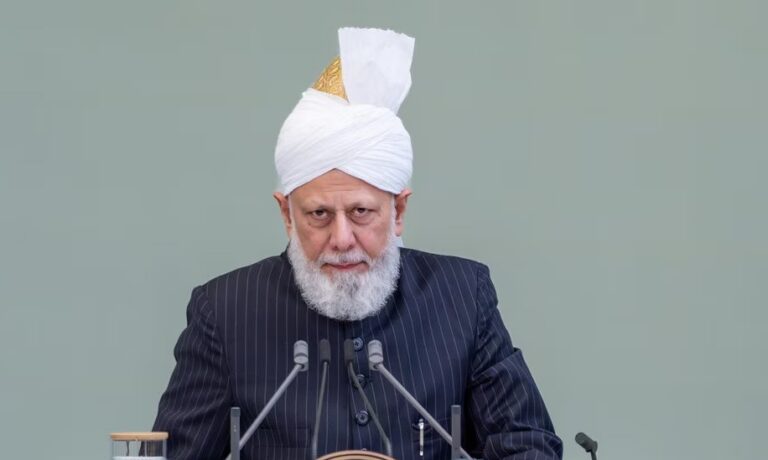
Through their contributions, women can—and indeed have—changed the course of history. This truth was reiterated by Mirza Masroor Ahmadaba, the Fifth Caliph and Worldwide Head of the Ahmadiyya Muslim Community, who stated:
“In the establishment and development of any nation or community, women play a fundamental and vital role.”
Today, March 8, celebrated as International Women’s Day, brings to the forefront the multifaceted role and influence women have in society at large. As part of this occasion, Light of Islam invited Muslim women from various walks of life to write about one woman who inspired them to become a better version of themselves.
While some have written about extraordinary women whose names are etched in history, others have reflected on the profound influence of friends, aunts, and mothers. Yet, what unites these stories is a shared admiration for advocacy for justice, perseverance in the face of trials, and courage in confronting societal pressures.
Ultimately, it serves as a powerful reminder for every woman of the ripples her seemingly small efforts create in a chaotic world.
There are women whose greatness is measured in thrones and titles. And then there are women whose greatness is measured in something far more enduring—in what they chose to give, and what they chose to believe, when no one else would.
Hazrat Khadija bint Khuwaylidra is that kind of woman.
Long before the word ‘Islam’ had been spoken aloud, she had already lived its spirit. A widow who rebuilt her life not on grief but on purpose, she ran a flourishing trade business with intelligence and integrity that commanded respect in an era when women were offered very little of it. Her people called her At-Tahira—the Pure One—a title earned quietly and consistently, long before revelation ever descended.
What strikes me most deeply about her is not her wealth or stature. It is the quality of her certainty.
When the Holy Prophet Muhammadsa came trembling from the Cave of Hira, shaken by an encounter that had shattered the world he knew, he ran to her. She did not flinch. She wrapped him in her arms and said words the world has not forgotten: “Allah will never disgrace you”. She was the first human soul to accept Islam—not out of duty or social expectation, but out of a faith so clear and so steady it needed no convincing.
The Holy Prophetsa later said of her: “She believed in me when the whole world refuted, and attested to my truth when everyone accused me of falsehood. She offered me compassion and loyalty with her wealth when everyone else had forsaken me.”
She gave him not only her belief but her entire fortune—every coin earned through years of honest work, placed in the path of Allah without hesitation. When the Quraysh imposed their brutal boycott, forcing early Muslims to survive on leaves and roots for three agonising years, Khadijahra endured it beside them—a woman once accustomed to comfort, now choosing hardship with silent grace. Her health broke under those years. She passed away not long after. And yet, she never once turned back.
She did not sacrifice from abundance. She sacrificed until there was nothing left.
When I reflect on her life, I find myself asking—what kind of woman do I want to be? And every time, her example answers quietly: be the one who believes. Be the one who stands firm when the ground is shaking. Be the one who gives, not when it is easy, but when it costs something real. Hazrat Khadijahra teaches me that faith is not merely what we feel in our hearts—it is what we do when everything around us says otherwise. Her legacy shapes the way I face doubt, the way I choose courage over comfort, and the way I hope to love—deeply, selflessly, and without keeping score.
She believed when the world refused to. And because she did, the world was changed forever.
Amatul Sabhoo Shahid, Qadian
On this Women’s Day, I honour the strongest woman in my life, my mother. She is my greatest role model, my strength, and my most precious blessing from Allah.
As a single parent, she raised three daughters on her own, placing complete trust in Allah at every step. She carried the responsibilities of both father and mother with dignity, resilience, and unwavering faith.
Life was filled with challenges, yet by Allah’s grace, we never slept hungry, never lacked clothing, and received the best education she could provide. Alongside our worldly upbringing, she ensured that our spiritual foundation remained strong. Our bond with Jamaat, Khilafat, and obedience to our beloved Khalifa was never compromised. Through every hardship, she lived the powerful Quranic promise: “Surely, with hardship comes ease.” (Holy Quran 94:6)
I witnessed her work late into the night and then stood before Allah in Tahajjud prayer, raising her hands for our success and protection. Despite difficulties, I never saw her question Allah or complain about her fate. Instead, she taught us patience, gratitude, and complete reliance upon Him. Her life beautifully reflects the teachings of the Holy Prophet Muhammadsa. When a man asked, “Who among people is most deserving of my good companionship?” the Prophet replied, “Your mother”. The man asked again, and he said, “Your mother”. He asked a third time, and again he said, “Your mother”. Then he said, “Then your father”. This Hadith perfectly captures the rank, sacrifice, and endless devotion of a mother.
My mother’s entire life has been a reflection of this elevated status—serving, sacrificing, and praying for her children without seeking recognition. She constantly reminded us of blessings many people do not have—like our Jamaat, Khilafat, and the prayers of our beloved Khalifa. She would say, “Never compare your life with those above you. Look at those who struggle more and thank Allah. Every blessing is uniquely given”. That lesson protected us from jealousy and ingratitude. She never allowed us to feel helpless before people.
She taught us that we bow only before Allah. Even today, as we are parents ourselves, she advises us to hold firmly to the rope of Khilafat and teach the same to our children. “If you hold onto it”, she says, “you will never fail”. Whenever someone tells me I am humble or a good person, I know it is nothing but my mother’s upbringing shining through me. To the world, she may seem ordinary, but to me, she is extraordinary—my mother, my hero, and my lifelong inspiration.
Zaheera Anas, Bangalore
“My children, don’t ever think that, ‘Our father has left nothing for us’. He has left for you a large treasure of prayers in the Heavens, which you will continue to receive in due course.”
“Oh, my dear Allah Almighty, he is now leaving us, but please don’t You (i.e. Allah Almighty) ever leave us.”
The above two powerful excerpts are ample enough to inspire anyone to believe in Allah being Al-Aziz and Al-Malik. These lines are by Syeda Nusrat Jahan Begum Sahibara, affectionately known as Hazrat Amman Jan, the “Khadijah” of this modern era, the virtuous wife and a constant pillar of support for the Promised Messiahas. She herself was a personification of Islamic values and epitomised the ideal of a devoted and constant Worshipper. Hazrat Amman Janra was such a magnetic personality who would be loved, followed and fondly remembered by thousands.
Learning about Hazrat Amman Janra has personally affected me and has raised my own standards of personal conduct when it comes to fulfilling one’s bai’at (oath of allegiance), which means to sell oneself. She inspires me to be courageous and remain steadfast during the trials of my life, never forgetting to thank Allah Almighty in all my obligatory and voluntary prayers for bestowing His Blessings upon me, exhibiting greater self-control, striving to become kind and helpful and making greater financial sacrifices.
The greatest thing I learnt from her is being sincere in my prayers, however busy my schedule may be. She made me believe that I too have a large treasure of prayers in the Heavens, which I will continue to receive in due course if I remain loyal to my Lord. For this, sincere prayers are an absolute necessity. This could only make you beloved in the eyes of your Lord, who would then never leave your side and can make mountains move for You.
Sayeda Nayela, Deputy Collector, Paradip, Odisha
When I sit and ponder the blessings Allah has bestowed on me, one radiating smile warms my soul beyond measure. Her face is so deeply engraved in my heart that I often don’t know how to introduce her. The word ‘friend’ could hardly hold the myriad hues of our bond.
Let me then introduce her to you as my soul sister, my Ahmadi friend—one of the defining anchors in my journey of faith. She is a spiritual compass to me, always pointing towards the true north whenever the dark clouds of uncertainty loom around me. It is by observing her that my own reflections on how Islam is to be lived take shape.
How do I define her? There is a plethora of identities to her, each carrying a mesmerising radiance much like the loving kindness of her smile. This intentional kindness is what makes her truly remarkable—the empathy with which she listens and the patience with which she responds.
As someone very dear to her, I too share in the warm comfort of mercy she offers anyone who reaches out. Her uniqueness lies in how she holds space without judgment and steadies those around her without overwhelming them. Like a bridge built with the brick and mortar of care and strength, she joins hearts, eases burdens, and makes what would otherwise be a difficult crossing of turmoils easier for others.
In my life, she remains a constant reminder that empathy is not just an emotion, but a conscious moral choice rooted in faith. Her balance of deen (faith) and duniya (world) gives me pure joy to witness and great inspiration to practice. She carries out her worldly duties with diligence, yet her soul is unmistakably anchored in her relationship with Allah.
The many conversations I have enjoyed with her have led me to this conclusion: sincerity and principle guide her decisions. Her piety is a consistent, daily choice, not just isolated purple patches of ritual performance.
Blessed persona that she is, what touches the depth of my heart most is her humility. She makes no claim to perfection. Instead, she is ever ready to acknowledge her shortcomings and consistently strives to grow past them. This quiet striving to better herself for the sake of Allah has taught me profound lessons no lengthy lecture ever could. Her calmness in adversity, her steadfastness in trials, and the ever-kindled embers of her concern for the well-being of others—especially women—are a deep well of reassurance in my life.
Having her as a best friend has given me clarity on what true strength is: it lies in being composed, principled, and deeply compassionate.
Shalini Thahir, Postgraduate Diploma in Journalism, Qadian
Often, it is portrayed that Muslim women have no voice, no agency, no history worth honouring and are in need of liberation from the outside. This Women’s Day, I want to write about two exceptional Muslim women whom I haven’t met but whose spirits I carry with me.
Hazrat Umm Ummarahra and Hazrat Khawlara lived in the early Islamic period. Honestly, they have done more to shape my understanding of strength, courage, womanhood, and what it means to face life’s storms without flinching or getting shattered than anyone I have encountered in my own lifetime.
Hazrat Naseebah bint Ka’abra, commonly known as Umm Ummarah, was one of the earliest women to pledge allegiance to the Holy Prophetsa and formally enter Islam. She went to the Battle of Uhud to give water to the wounded. But when chaos broke out, and only a few men were left to protect the Holy Prophetsa, she did not look around, waiting for someone else to act. She put down the water vessel, picked up a sword and shield, and stood in front of him. She sustained multiple wounds that day and yet did not leave when even many brave men wavered.
When the battle was over, the Holy Prophetsa said he could look nowhere on the battlefield without seeing her fighting by his side. What moves me even more is that she was also a mother. She bandaged her son’s wounded arm mid-battle and told him to keep going. And years later, when her other son was brutally tortured and martyred for his faith, she felt gratitude that he had remained firm. That kind of strength, resilience and steadfastness in faith comes from a very deep, very real connection with Allah, built over a lifetime.
Hazrat Khawlara displayed equally startling bravery when her brother Hazrat Dirarra was captured by the Byzantine army in a battle. Despite attempts, the Muslims were unable to free him. Eventually, as Hazrat Khalidra led a force to rescue him, the Muslims noticed a fearless warrior on a horse, fiercely attacking the enemy, exhibiting warfare intelligence and expertise, striking terror into their ranks. No one knew the warrior’s identity as the soldier was fully covered in clothing over the armour, with even the face concealed. One can draw parallels to the modern-day burqa. When asked, the warrior finally revealed she was not a man but a woman—Khawla bint Azwar and said simply: “The pain in my heart has led me here.”
That line stays with me, teaching me to remain determined even in moments of grief and life’s lowest. Inspired by her courage, the Muslims launched a united attack and scattered the Byzantine forces. When there was no army, she became one, and later, when taken prisoner herself, she did not crumble. Instead, rallied her fellow Muslim women prisoners, armed them with tent poles, and held off 3,000 soldiers until help arrived.
These days, Gaza often reminds me of Umm Ummarahra and Khawlara. The spirit both women carried can be seen in the women and girls of Gaza today. The refusal to be broken and the faith that remains even when everything around them is collapsing. After losing their homes, children and the simple comforts of ordinary life, the women of Gaza still rise. They continue to hold their families together and care for one another among the ruins with a dignity that humbles those watching from afar. They did not choose this battlefield, yet they face it with the same courage and immense trust in Allah that defined Umm Ummarara and Khawlara.
The world often labels Muslim women as oppressed, but the women of Gaza are showing the world what true endurance looks like.
Today’s battlefields are different. There is the haunting possibility that we may stand where the women of Gaza stand now, as the world hurtles towards catastrophe. There are storms that arrive in personal life. There are the everyday struggles of navigating a world stripped of spirituality that often misrepresents my faith and my Muslim woman identity. And then there is the most personal battlefield of all, where there is inner struggle against arrogance and weakness, the pull of convenience over what is right, and the moments when standing on principle costs.
What I take from Umm Ummarara and Khawlara is to carry that same warrior spirit and resilience, rooted in exceptional faith, into any of such storms that life brings forth, whether in professional environments or personal life.
Qurratul Ain Maryam, Architect, pursuing a PhD in Public Policy at IIM Bangalore
Growing up as a Muslim woman, I often hear and read about many inspirational women. However, witnessing someone’s journey in real life from childhood and being inspired by them is a completely different experience.
I am speaking about my aunt—an Urdu teacher, translator, and much more. As a student, she worked tirelessly in her studies. After earning her Bachelor’s degree in Urdu and Education, she began working as an Urdu teacher while simultaneously pursuing her Master’s degree, all while carrying her first child.
I had the privilege of being her Urdu student during my 11th and 12th grades. Beyond teaching us Urdu ghazals, na‘ats, ruba‘i, and stories, she instilled in us the values of honesty, integrity, and strong moral character—qualities essential for life.
What inspires me the most about her, however, is something deeper: her sincere love for Islam Ahmadiyyat. This inner fire within her manifests itself in many ways. While she was a student, she was the only girl in her entire college to observe purdah. She was mocked by others, with some even calling her a ‘terrorist’. Yet this young woman never hesitated or wavered in her conviction. Over time, her courage and steadfastness earned the admiration and praise of her professors. Through her example, I came to see veiling as a powerful expression of a woman’s faith and personal choice.
As an aunt—someone I regard as a second mother—every word of advice she gives carries great value for me, and I have always benefitted from following her guidance. Despite her busy schedule, she still finds time to gather children from her neighbourhood who struggle to read the Holy Quran and patiently teaches them. In her, I see someone who constantly strives to uplift others and share knowledge with those around her.
Although her achievements are impressive to an outsider, what I admire most is that inner fire—her deep love for Allah and Islam Ahmadiyyat. It is this love that transforms all her worldly successes into tools for serving people and benefiting her community.
Shamaela Sozen, MA English, Kannur
Women have been misunderstood, misrepresented, and confined within narrow definitions for centuries. Islam has elevated women to a stature of power, admiration, and influence. It is Islam that gave us Hazrat Khadijara.
A woman older than the man she chose to marry. A successful businesswoman. A woman of intellect, dignity, and immense strength. And yet, she was the most gentle one, not fragile, but deeply composed. She did not diminish herself to stand beside greatness; she accentuated and reflected the light that the Prophet Muhammadsa carried.
When revelation first descended in the Cave of Hira, and the Prophet Muhammadsa returned home trembling, overwhelmed by the weight of what he had witnessed, it was Hazrat Khadijara who received him. She did not question his sanity. She did not retreat in fear. She wrapped him in reassurance, honoured the man she had chosen, and affirmed his truth with unwavering faith. In that moment, when the world had not yet believed, she believed.
What inspires me most is not only her support, but her discernment, her ability to recognise truth before it was validated by the world. Her conviction teaches me that believing in goodness, even when it stands alone, is an act of courage. Her life teaches me that strength and tenderness are not opposites; they coexist. Every time I face doubt, resistance, or isolation for holding on to what I believe is right, I remember her.
Syed Rummana Waseem, Operations subject matter expert, Srinagar Khaas, Jammu and Kashmir
2 Comments
Syed Ahmed Owais · March 8, 2026 at 7:22 pm
WOW! What a beautiful articles
I’M REALLY IMPRESSED NOT JUST BY THE CONTENT BUT BY THE WRITER AND THEIR PORTFOLIOS
May Allah enable all of us to follow the footstep of these righteous women
JANNATUL MAUYA ELA · April 19, 2026 at 11:43 am
THESE ARTICLES ARE SO CHANGEMAKING AND NOURISHING TO SOUL. I AM SO GRATEFUL TO READ AND LEAVE A COMMENT HERE.