














INAMULLAH MASROOR, QADIAN
As we stand at the end of the blessed month of Ramadan, our hearts naturally reflect on the spiritual journey we have undertaken. The very word Ramadan implies ‘two heats’. Spiritually, we can understand these two heats as a profound, reciprocal love—the intense, burning love for Allah radiating from His servant, and the warmth of Allah’s love embracing the servant in return. To attain the blessings of this month hence requires these two heats, ignited and adopted during this sacred month, to continue to burn all through our lives.
That is, the true success of this month does not lie in a temporary shift in behaviour. The efforts we make right now to obey the commandments of Allah, to mirror His character, and to bear His divine prints must be a lifelong endeavour.
As the Holy Prophetsa reminds us that the most beloved deeds to Allah are those that are done consistently, even if they are little.[1]
Ramadan is merely the training ground; the goal is to carry these qualities forward, continuing and developing them every single day of our lives.
Absorbing the colour of Allah
The Holy Quran urges man to follow the path of God and acquire His attributes. Hence, it states:
“(Say, ‘We will adopt) the religion of Allah; and who is better than Allah in (teaching) religion, and Him (alone) do we worship.”[2]
Interestingly, the term used here for religion is not deen or shariah, but sibghah—a word with such lexical richness that describing it merely as the observance of rules would not do it justice. The term sibghah means ‘dye’ or ‘colour’.[3] Religion is called sibghah as it envelops a person the way dye permeates fabric.[4] This understanding sheds ample light on what it truly means to acquire the attributes of God.
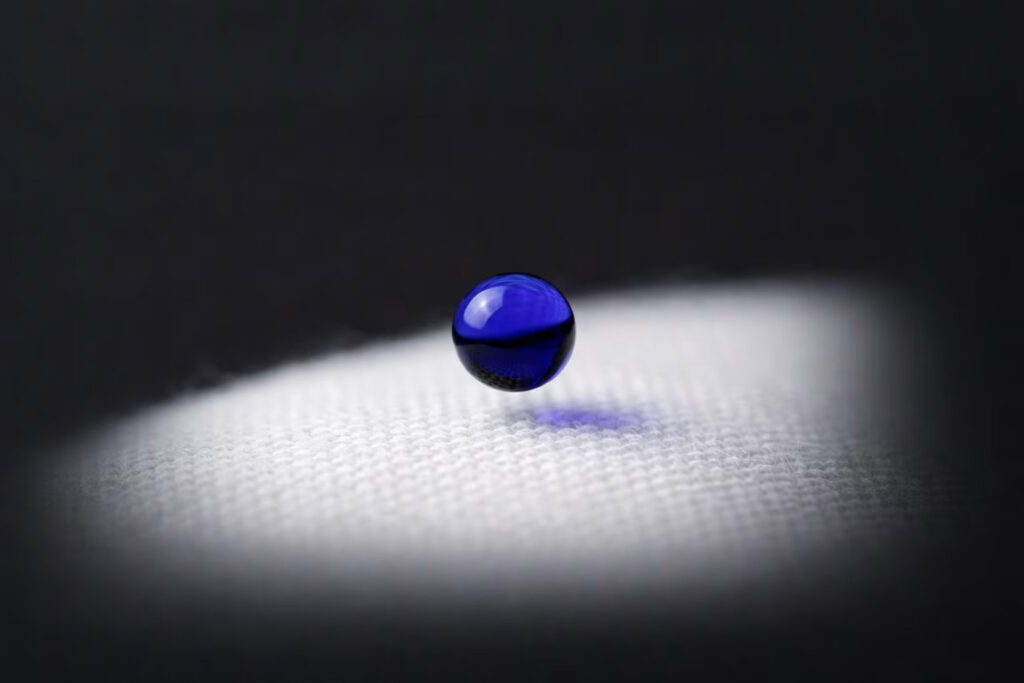
Colour has a remarkable power. A simple drop of dye can completely transform a piece of cloth. What was once plain becomes vibrant and beautiful. The above verse uses this very imagery by calling man to adopt the Colour of Allah.
But what does it truly mean to take on the Colour of God? It means striving to reflect the attributes of God within ourselves—to cultivate mercy, kindness, justice, patience, generosity, and forgiveness until they become the natural colours of our character. In other words, the Quran invites human beings to become living reflections of Divine qualities.
According to Islamic teachings, this transformation is not something impossible or beyond human reach. In fact, it is the very purpose for which mankind was created.
God has placed within every human being the ability to reflect His attributes. No one can honestly say, “I cannot show compassion”, or “I cannot be forgiving”, or “I cannot display generosity”. These qualities are already embedded in the human soul. Holy Prophetsa hinted at this truth when he said:
“Allah created Adam in His image.”[5](Sahih Bukhari)
Islam does not teach that God has a physical form. Rather, this saying means that human beings were granted the capacity to reflect divine attributes. Just as God is Merciful, humans can show mercy; just as God is Generous, humans can give generously within their own means. Thus, spiritual nearness to God is achieved when a person gradually becomes a manifestation of these divine qualities.
Learning from nature
Nature itself illustrates this idea beautifully. Consider a cold, dark piece of iron. When it is placed into a blazing fire and left there, a remarkable transformation occurs. It absorbs the intense heat and light until it begins to glow red-hot, taking on the very colour and radiant qualities of the fire itself.
If a lifeless piece of metal can adopt the brilliant colour and burning properties of the fire it is immersed in, should human beings not adopt the colour of the One who created them? Is our Creator less capable of transforming a willing heart than a worldly fire is of transforming iron? Surely not.
When a person turns sincerely towards God, remembers Him, and tries to live according to His teachings, the colour of divine attributes gradually becomes visible in their personality.
The invisible colours we spread
Every person carries invisible colours within them. Our thoughts have a tone; our words carry emotional shades; our attitudes influence the atmosphere around us.
When a teacher enters a classroom with anger in their heart, the tension is felt immediately. Even before they speak, students sense the heaviness. But when someone enters with calmness and kindness, the environment changes instantly. People feel at ease. This happens because our inner state radiates outwards. We are constantly spreading emotional colours wherever we go.
However, unlike physical colours that fade quickly, the colours of our behaviour may remain in someone’s heart for years. A harsh comment can leave a deep scar, while a gentle word can remain a source of comfort long afterwards.
If we observe our daily interactions honestly, we may notice that the colours we spread are not always the most beautiful. At times, greed replaces contentment; suspicion replaces trust; comparison overshadows gratitude; and anger replaces patience. Each reaction becomes another colour we cast into the world. But the Quran reminds us that we have the power to choose differently, as it says:
“Repel evil with that which is best. And lo, he between whom and thyself was enmity will become as though he were a warm friend.”[6]
People may criticise us, misunderstand us, or treat us unfairly. Yet they cannot enter our minds and decide how we think. Our response remains our choice.
Arrogance can be met with humility. Harshness can be softened with patience. Anger can be answered with calmness. The Promised Messiahas beautifully captured this elevated standard of character in one of his Urdu couplets:
گالیاں سن کے دعا دو، پاکے دکھ آرام دو
کبر کی عادت جو دیکھو، تم دکھاؤ انکسار
“Return prayers for insults, and offer comfort when you receive pain;
When you encounter the habit of arrogance, respond with humility.”
This ability to transform negativity into goodness perfectly reflects the Colour of Allah in human behaviour.
When Divine Attributes like Raheem (Merciful), Ghafoor (Most Forgiving), Wahhab (the Bestower), and Razzaq (the Provider) appear in our behaviour, the Colour of God begins to shine through our actions. Resultantly, our actions become a reflection of divine mercy and generosity, spreading peace, compassion, and goodness in the world around us.
Carrying the colour beyond Ramadan
It is impossible to live in this world without adopting some kind of colour. Every environment influences us. People often adopt the colour of their friends, their society, or cultural trends. But the Quran directs us to something far greater: If we must adopt a colour, it should be the Colour of Allah. Because only the One who created us can truly guide us to fulfil our purpose. When a person adopts this divine colour, they do not lose their identity. Instead, their character becomes more beautiful, more balanced, and more uplifting for everyone around them.
Today, as we look at a world bleeding from conflict and war, the call to embody Allah’s attributes of mercy and peace is more critical than ever. Each of us must become a bearer of divine colour for transforming this turmoil into tranquillity.
So, let us not just borrow this divine colour for the closing days of Ramadan, but completely dye our hearts with it, making it the permanent signature of our entire lives.
Inamullah is a graduate of Jamia Ahmadiyya Qadian, the Ahmadiyya Institute of Languages and Theology. He currently serves in the national publications department of the Ahmadiyya Muslim Community.
END NOTES
[1] Sahih al-Bukhari, Kitab ar-Riqaq (The Book on Making the Heart Tender)
[2] Holy Quran 2:139
[3] Arabic-English Lexicon by Edward William Lane, p. 1648, under ‘sabagha’
[4] Aqrab al-Mawarid, p. 632, under ‘sabagha’
[5] Sahih Muslim, Kitab al-Birr was-Silah wal-Adab (The Book of Virtue, Kinship, and Good Manners)
[6] Holy Quran 41:35
5 Comments
Nasar · March 18, 2026 at 5:48 pm
An excellent piece. Attaining the ‘Color of Allah’ requires effort. Just as a piece of cloth is boiled in hot water to absorb dye, similarly, acquiring the Color of Allah demands diligent effort. However, the ease in attaining this Color lies in the fact that if you take just one step forward, the Giver of this Color will take ten steps towards you. Therefore, continue to strive and pray.
Naseer Ahmad CG · March 19, 2026 at 1:18 am
MashaAllah. Enjoyed reading the article. It was very encouraging and motivating for a better/best world.
Nelofar · March 19, 2026 at 4:32 am
Beautifully penned. Mashaallah. Timely article on the true pristine teachings of Islam, deeply grounded on finding God and becoming the most peaceful servants of Him on this earth.
Sara Shameem · March 19, 2026 at 6:14 am
Mashallah,very perfectly depicted the value of The Holy Month .We hope to carry its colours throughout our lives.May Allah help us in this.
Thanks for the Lovely message.
The Living Mirrors: Finding the True Colour of God · April 21, 2026 at 5:13 am
[…] the ultimate purpose of our existence, as discussed here, is to absorb the sibghah—the colour of Allah—a crucial question naturally arises: where do we […]