

SALEEQ AHMAD NAIK, QADIAN
In contemporary atheistic discourse, one of the most frequently repeated objections against belief in God is framed in the rhetorical question: “What happened to the old gods?” Recently reiterated by the renowned Indian lyricist Javed Akhtar, this question is often presented as evidence that gods are merely human inventions—created, revised, and eventually abandoned as societies evolved.
This objection, however, rests upon a historically and philosophically flawed assumption: that belief in God emerged gradually within human society, evolving from primitive polytheism into refined monotheism. If this assumption were correct, the disappearance of earlier gods would indeed undermine belief in God altogether.
The real issue, therefore, is not the fate of the so-called “old gods”, but whether belief in a supreme, invisible Creator is a gradual human construction or an original and universal reality. This article addresses that question directly through historical evidence, rational analysis, and comparative religious study.
Universality of belief in God
One of the most striking facts of human history is that no civilisation has ever been entirely godless. Even among societies described as primitive or uncivilised, belief in a supreme, invisible Creator is consistently found.
This poses a serious challenge to the claim that God is the result of human cognitive development. Because if the concept had emerged gradually, it would have required considerable time to spread across different regions and cultures. However, belief in God appears in various tribes in different parts of the world, so early in history, at a time when societies were disconnected from one another.
Among African tribes, belief in a supreme God was widespread. The Ga people believed in Ataa Naa Nyͻŋmͻ, regarded as the Creator and originator of all.[1] The Zulu believed in an invisible supreme being known as uNkulunkulu, revered as the Father of the entire world.[2] In West Africa, Nzambi Ampungu was regarded as the Creator of the universe and the Father of humankind.[3]
In Babylonian civilisation, belief in a supreme deity appears in an elevated and refined form.[4] The indigenous peoples of North America believed in a single supreme deity known as Gitche Manitou.[5] Among the Arrernte tribe of Australia, belief existed in a heavenly God called Altjira, regarded as gentle and forgiving.[6] The Wiimbaio people of Australia similarly recognised a powerful supreme God.[7]
In the Indian subcontinent, belief in divine omnipotence is also evident. Varuna is described as All-Knowing and Omnipresent, fully aware of all actions, whether open or concealed, and exercising dominion over heaven and earth.[8] Among the Khasi people of Meghalaya, belief centres on U Blei Nongthaw, an omnipotent Creator God worshipped as the origin of all.[9]
These examples, drawn from geographically and communicatively isolated civilisations, demonstrate that belief in a supreme Creator is not culturally inherited from a single source, but represents a universal human reality.
Primitive monotheism and historical evidence
According to the theory of progressive evolution of religion, primitive man devised the concept of many deities, which then converged into the idea of One God. However, this idea entirely rests upon the presuppositions of atheistic sociologists, with no evidence to substantiate it.
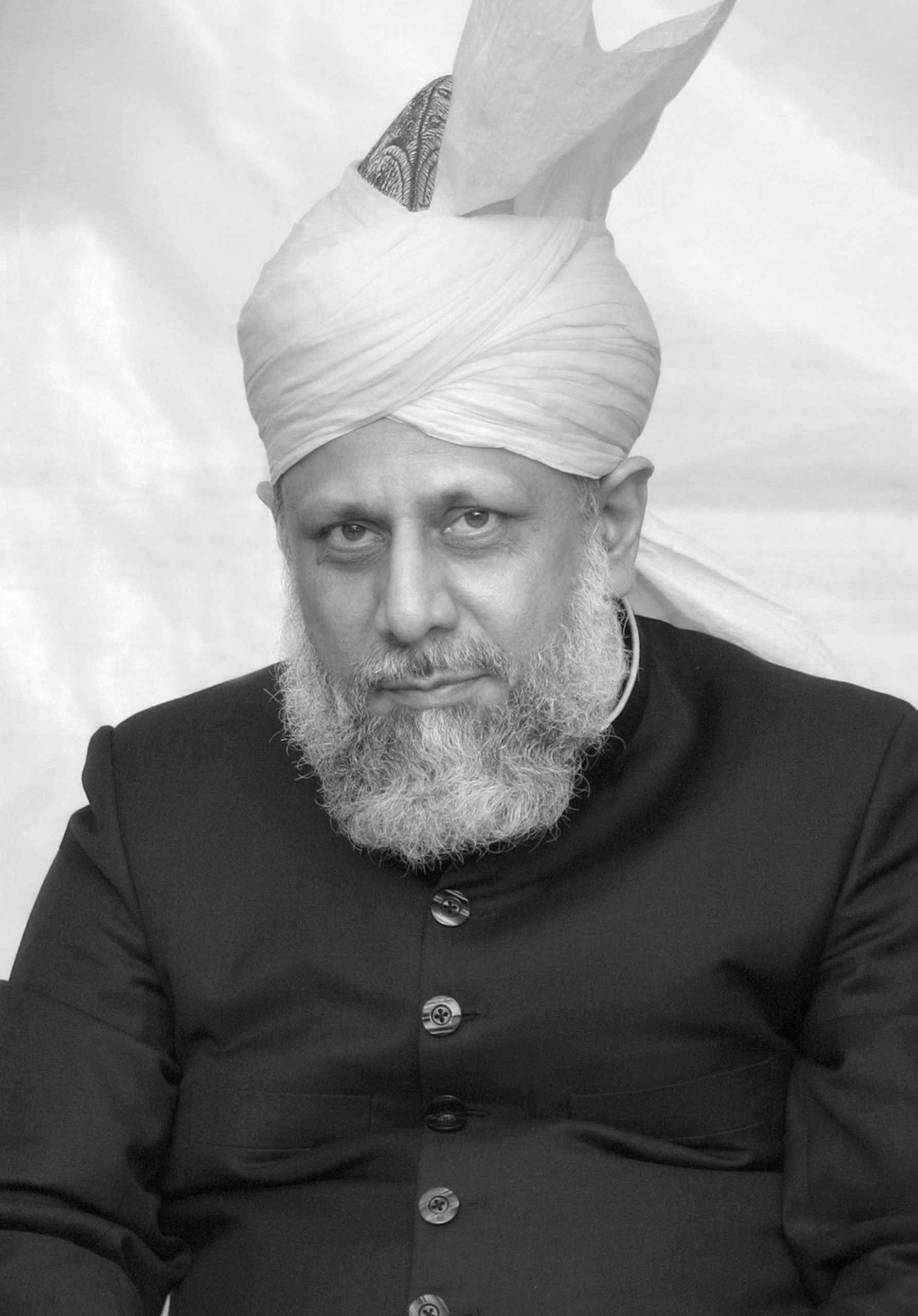
The Fourth Caliph of the Ahmadiyya Muslim Community, Hazrat Mirza Tahir Ahmadrh points out the theory’s unsupported basis, saying:
“History does not provide any evidence to support the theory of progressive transformation of polytheism to monotheism. No transitional stages are witnessed in which communities moved from worshipping many gods to the worship of One.”[10]
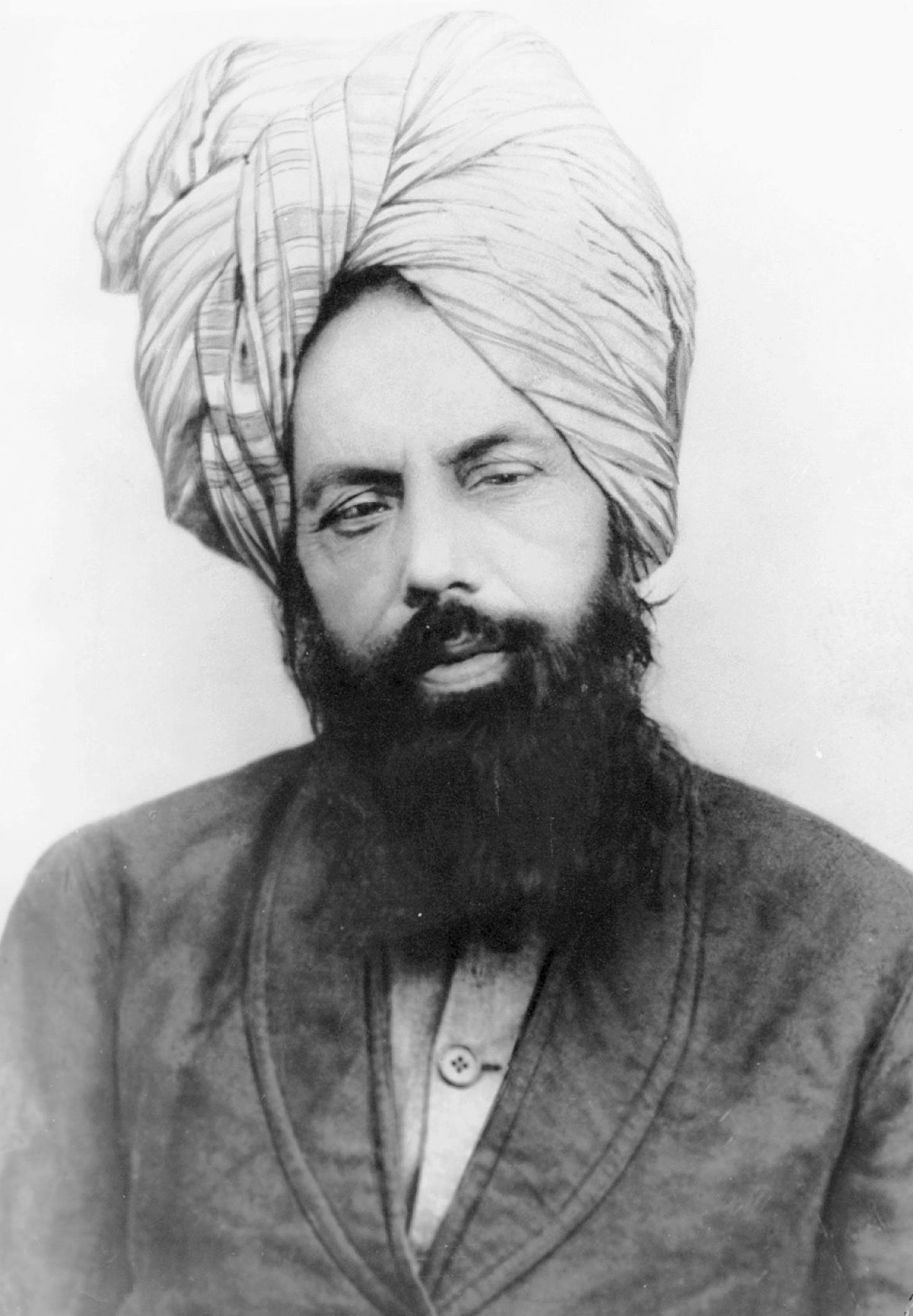
In fact, a study of religions shows that it is monotheism that degenerated into polytheism. The Second Caliph of the Ahmadiyya Muslim Community, Hazrat Mirza Bashiruddin Mahmud Ahmadra, expounds on this, saying:
“Archaeology shows that many nations in which polytheistic ideas are found today originally practised the worship of One God. For instance, Max [Müller], a researcher, investigated China and found that although today they believe in separate gods for everything… yet in ancient times, only One God was worshipped there. Similarly, the history of Babylon… also reveals that in early times the concept of One God existed there.”[11]
This conclusion is substantiated by anthropological research as well. Hence, scholars such as Andrew Lang and Wilhelm Schmidt have advanced the theory of Primitive Monotheism, according to which early human societies originally possessed belief in One Supreme God, while polytheism emerged later as a distortion.[12]
Logical incoherence of the gradual evolution theory
The theory that belief in One God developed gradually is not only historically weak but also logically inconsistent. It is an accepted principle that ideas which arise later within a society tend to gain wider acceptance. As human knowledge progresses, earlier views that are corrected, revised, or refined gradually lose prominence, surviving only as residual traditions. This pattern is evident even in humanity’s evolving understanding of the physical world.
Given this, if the concept of One God were a later development, we should see monotheism as the prevalent belief today. The Second Caliph discusses this, saying:
“The condition of all ancient nations shows that while the concept of One God exists among them, the worship of lesser gods is more prevalent. If it were true that belief in One God emerged gradually, then worship of One God should have been more dominant among all nations, and if lesser gods remained, they would have existed merely as traditional remnants, without real attachment. But reality is entirely contrary to this. Among ancient nations, worship of lesser gods predominates, while worship of the One God appears only marginally. This historical pattern decisively refutes the theory of gradual religious evolution.”[13]
This reality indicates degeneration rather than progress. He further challenges the idea of religious evolution from polytheism to monotheism in light of a contemporary parallel. Islam began in a state of absolute monotheism, yet deviations later emerged among some Muslims:
“At its inception, not even a trace of polytheism was included in its teachings. Yet gradually, what condition have Muslims reached today? Are there not among Muslims today who worship graves, trees, jinn, spirits, and stars?”[14]
Thus, historical evidence does not support the claim that belief in One God evolved gradually from polytheistic concepts. Rather, it points to an original monotheistic awareness that was later fragmented into belief in many gods.
Revelation as a universal phenomenon
There is yet another problem with the claim that belief in God emerged gradually as a result of human cognitive development. Because if the concept were gradual, the most basic idea (God exists) should logically emerge first. More complex ideas (like God communicates with humans and guides them through revelation) should only appear later.
However, we see that belief in God has rarely been separated from belief in divine communication. Across civilisations, humanity has consistently believed that moral law, social order, and sacred knowledge originated from a transcendent source.
Comparative religious history confirms this pattern across continents: Vedic Shruti in Asia, revelation to Zoroaster in Iran, divinely sanctioned law in Egypt, oracular guidance in Greece, prophetic revelation in Semitic religions, sacred dreams in the Americas, and Dreamtime in Aboriginal Australia.
The purpose here is not to argue that since revelation says God exists, therefore God exists. Rather, the intent is simply to demonstrate that the universal presence of the concept of revelation among diverse, mutually unconnected societies indicates that belief in God cannot be reduced to mere human imagination or a by-product of social evolution—as revelation implies immediacy and abrupt emergence, rather than gradual, progressive development.
Hazrat Mirza Bashiruddin Mahmud Ahmadra highlights the significance of this universality:
“Even among the most ancient and so-called savage tribes, the concept of revelation is firmly established. These people believe that the laws and customs they follow were revealed to them by God. This testimony, emerging from societies unfamiliar with philosophical debate, proves that belief in revelation is not a product of gradual development, but an ancient and universal reality.”[15]
This convergence across unconnected societies cannot reasonably be explained as a coincidental invention.
Putting all the pieces together
While all this evidence poses an insurmountable challenge to the atheistic theory of religious evolution, the Holy Quran, on the other hand, provides a clear perspective.
It testifies that man was created with an inherent disposition to believe in a Creator, hence offering a coherent explanation for the presence of belief in God across various ancient, unconnected civilisations:
“(And follow) the nature made by Allah—the nature in which He has created mankind.”[16]
Similarly, the Quran affirms the universal prevalence of the concept of revelation, declaring that divine guidance, in one form or another, reached every people:
“And there is no people to whom a Warner has not been sent.”[17]
That is to say, no nation ever passed in the history of mankind to which a messenger was not sent. It is precisely for this reason that even the most ancient civilisations—geographically isolated and regarded as culturally primitive—are found to possess belief in revelation, and likewise, in a transcendent, invisible supreme Creator.
What happened to the old gods?
When divine teachings revealed by Allah the Almighty were altered over time, human beings fragmented the concept of God into families of gods, goddesses, and physical representations. The Quran describes this process not as the creation of new gods, but as a distortion of the true concept of God.
Any understanding of God that contradicts this true concept is categorically dismissed by the Quran as mere human fabrications. Hence, it says:
“You worship nothing beside Allah, but (mere) names that you have named, you and your fathers; Allah has sent down no authority for that.”[18]
Thus, the Quran does not introduce a new theology but restores the original monotheistic truth, which was repeatedly distorted by humanity.
The disappearance of old gods does not signify the disappearance of God. Rather, it reflects humanity’s tendency to fragment divine teachings into multiple deities and physical representations. The Quran describes this process as tahrif (distortion) and shirk (association), not religious evolution.
Hazrat Mirza Bashiruddin Mahmud Ahmadra summarises this conclusion succinctly:
“In short, both rational inquiry and historical evidence confirm that belief in God has existed since ancient times and spread throughout the world through divine revelation, while polytheistic ideas represent later distortions.”[19]
An appeal to reason and intellectual integrity
If God were merely a product of human imagination, it would be exceedingly difficult to explain why belief in a supreme, invisible Creator—and belief in divine guidance—has appeared repeatedly across every era, on every continent, and among societies with no historical connection.
The universality of this belief is not an accident of culture, but a consistent feature of human history. To dismiss it as a coincidence is not an exercise in reason, but an evasion of it.
The question, therefore, remains:
Is the universal recurrence of belief in One God and revelation merely a coincidence of human thought, or does it point to an enduring external reality, which humanity has recognised under different names throughout history?
Evidence, reason, and revelation converge upon a single answer.
END NOTES
[1] The Structure and Style of the Ga Libation Text, Rosemary Enyonam Aku-Shika Tamakloe (2016), University of Education, Winneba
[2] Missionary Interventions in Zulu Religious Practices: The Term for the Supreme Being, M. R. Masubelele (2011), Acta Theologica
[3] The Spiral as the Basic Semiotic of the Kongo Religion, the Bukongo, Kiatezua Lubanzadio Luyaluka (2017), Journal of Black Studies
[4] The Pantheon of Uruk during the Neo-Babylonian Period, Paul-Alain Beaulieu, Brill Styx, Leiden (2003), p. 115
[5] International Dictionary of Historic Places, Volume 1: The Americas, edited by Trudy Ring, Noelle Watson & Paul Schellinger, Routledge, London and New York (1995), p. 349
[6] Storytracking: Text, Stories & Histories in Central Australia, Sam D. Gill, Oxford University Press, New York (1998), pp. 93–103
[7] Primitive Ritual and Belief: An Anthropological Essay, E. O. James, Methuen & Co. Limited, London (1917) p. 190
[8] Handbook of Hindu Mythology, George M. Williams, ABC-CLIO, California (2003), p. 294
[9] The Khasis, P. R. T. Gurdon, published under the orders of the Government of East Bengal and Assam, London (1907), p. 105
[10] Revelation, Rationality, Knowledge and Truth, p. 207
[11] Hasti-e-Bari Ta‘ala (The Existence of God), pp. 20–21
[12] The History of Religions, Ugo Bianchi, E. J. Brill, Leiden (1975), pp. 87–88
[13] Hasti-e-Bari Ta‘ala (The Existence of God), p. 21
[14] Ibid, p. 22
[15] Ibid, pp. 22–23
[16] Holy Quran 30:31
[17] Holy Quran 35:25
[18] Holy Quran 12:41
[19] Hasti-e-Bari Ta‘ala (The Existence of God), p. 23









0 Comments