

















HUSAM AHMED SHAFEEQ
A group of researchers, venturing through a forest, stumbled upon a strange arrangement: a stick standing upright at the centre of a circle of stones. Upon closer inspection, they discovered that the setup fulfilled a specific function. As the sun moved, the stick’s shadow shifted across the stones to provide an accurate calculation of time. Despite the absence of any sign of civilisation nearby, the meticulous assembly of the apparatus compelled the researchers to infer that it was purposefully designed.
However, given a number of natural factors that could have possibly caused such an arrangement, some might wonder why the researchers would invoke a designing agent whose existence could not be even remotely found.
After all, is it not unscientific to believe in something without ‘evidence’?
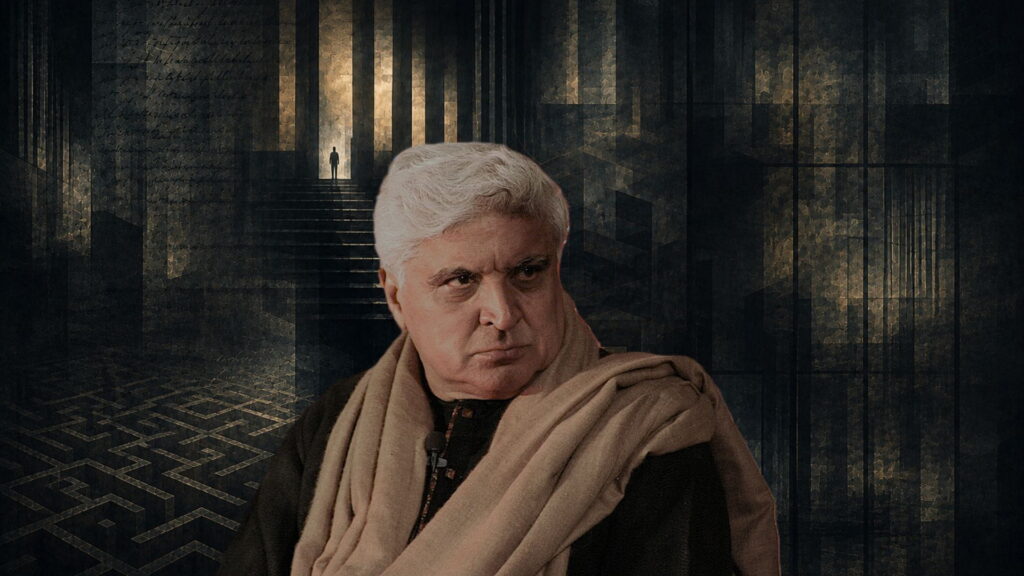
Given his recent remarks, Javed Akhtar would describe these scientists as delusional. Speaking at a recent program,[1] the lyricist equated religious beliefs to having a ‘split personality’, where one chooses to live with the ‘contradiction’ between their beliefs and scientific facts. While he blatantly characterises all religious people as schizophrenic, the flaws in his statements reveal that it is Akhtar himself who suffers from the delusion he seeks to find in others.
Haunted by presuppositions
Akhtar seems obsessed with his own preconceived notions that he confuses subjective statements for rational arguments. When asked why he was an atheist, he smugly replies that it is because he can think, implying that anyone with critical thinking skills should denounce belief in God.
For Akhtar and his atheist peers, such statements may be aimed at reaffirming their dwindling confidence in their own reasoning abilities. Hence, we find no reason to blame them, in spite of the fact that what they say is largely proven to be false by recent research.[2]
However, in order to assert his scientific temper, Akhtar feels compelled to target even the esteemed scientists at ISRO with his presumptuous remarks, alleging them to be suffering from some mental disorder because of their belief in God. This is not to suggest that the introduction of religious practices into scientific institutions is justified; rather, it goes against the principles of secularism. What is implied here is that to outright dismiss someone’s intellectual credibility solely because their worldview does not conform to one’s own is both unreasonable and unscientific.
Undoubtedly, such unabashed disdain towards individuals—with academic and scientific credentials far surpassing his own—can only stem from Akhtar’s dogmatic conviction that his views are absolutely infallible. This clearly reflects a mindset that is too rigid for someone claiming to uphold scientific temper.
A faith that defies logic
Akhtar dismisses the concept of God as unscientific, claiming that it lacks empirical evidence. However, by doing so, he admits his ignorance about a fundamental principle of science that the method of investigation should suit the object in question.
If a lack of empirical evidence is understood to invalidate the existence of a thing, it would imply that a staggeringly large part of the universe does not exist. Science tells us that only a tiny fraction of the universe is theoretically detectable to man, while the unobservable universe is 250 times larger than what can be observed.[3] Similarly, around 95 percent of the universe’s content is imperceptible to even the most advanced instruments invented by man.[4] Given Akhtar’s logic, even to consider the possibility of these ‘dark’ parts of the universe would render a person mentally challenged, regardless of their vast knowledge and expertise in the field.
The very definition of God as the Creator of the universe necessitates Him to be beyond all physical dimensions. This implies that any demand to perceive Him through physical senses must be unscientific. Yet, Akhtar insists on detecting God through empirical means, all the while ignoring His signs manifest in the marvellous workings of each cell in his body and innumerable wonders that surround him in the entire cosmos.
We must confess—it takes a faith that defies science to be an atheist like Akhtar.
Catching them young: Who brainwashes children?
We do not disagree with Akhtar that indoctrination of children can significantly impact their cognitive abilities. What we disagree with, however, is his assumption that introducing religious values to children necessarily amounts to brainwashing them.
Indoctrination involves any effort to impose one’s beliefs upon others in a way that forces them to accept it without question. However, for Akhtar—and likewise for his ideological comrades—it is not how an idea is taught but the idea itself that determines whether it qualifies as indoctrination.
This is the reason that atheists are never accused of brainwashing children, whether it happens in homes where parents inculcate irreligious cultures in their young ones,[5] in schools where scientific facts are twisted to suit a Godless worldview,[6] or even when children are aggressively indoctrinated into atheism at the behest of the state.[7]
However, this is not to deny that some religious parents do seek to impose their beliefs upon children, which is never justified by the true teachings of any religion. Nevertheless, given the intuitive tendency of man, it is atheism that needs to herd children towards disbelief and instil in them a rejection of God, while religious beliefs occur naturally in man.
Research has proved, especially over the last few years, that children are predisposed to believe in God,[8] making man cognitively hard-wired for religious beliefs.[9] That is to say, atheism is an alien ideology injected into children by suppressing their natural tendency to infer the existence of a Creator. Quite hypocritically, such efforts that seek to undermine children’s reasoning faculties are never condemned—but are rather lauded—by atheists.
For example, an article published in the Wall Street Journal commended the research of Boston University psychologist Deborah Kelemen, who discovered a way to instil the Darwinian worldview in children by suppressing their common sense, which might otherwise lead them to invoke an Intelligent Designer behind the universe.[10] Dr Kelemen proposes to teach children the Darwinian mechanism through fictionally extrapolated examples, and suggests to catch them young before the alternative design-theory becomes established in their minds.[11]
If, as Richard Dawkins puts it, “forcing un-evidenced opinions” on children amounts to indoctrination[12], we find no reason why atheism should be exempted from the charge of doing the same.
Political atheism and the anti-science propaganda
In the atheistic account of the history of science, which Akhtar proudly subscribes to, religion is always portrayed as an antagonist that has always disrupted and hindered scientific advancement. Though there is no denying that we find instances throughout history where many scientific discoveries were opposed by religious fanatics, what this narrative deliberately omits is the fact that atheists share an equal—if not greater—blame for obstructing the progress of science.
For instance, when the Big Bang theory was first proposed in the early nineteenth century, many atheist scientists and philosophers rejected it, not on the basis of evidence, but for the reason that the proposition carried ‘unwelcome’ religious implications.[13] Similarly, in Soviet Russia, numerous fields of scientific research were entirely banned for not conforming to the philosophy of dialectical materialism.[14] Many scientists were fired, arrested, sent to camps and even executed for challenging the ideologies of the state.[15]
However, this may not necessarily imply that atheism, as an ideology, should be understood as a rival to science. Similarly, just because some religious people act in regressive ways does not mean that religion as a whole should be held accountable.
At the same time, the contributions of religion to the advancement of human knowledge cannot be overlooked. The intellectual achievements of ancient Greek philosophers, Indian scholars, and scientists from the Islamic Golden Age have been pivotal in laying the foundation of modern science. Disregarding these contributions would be a grave injustice to science itself.
On the wings of religion towards enlightenment
To conclude, it would be unwise to expect Akhtar to adopt a rational approach towards religion, while he does not lend that consideration to science. Hence, there is no reason to be surprised if Akhtar considers religion as a ‘relic of the age of darkness’, except that it highlights his own ignorance of the history of human enlightenment.
It might come as a surprise to Akhtar that many of the greatest achievements that transformed the structure of human civilisation—including formal education systems, libraries, universities, hospitals and many more—were all contributions of religion.[16]
That is to say, most of the philosophical, ethical, cultural and scientific advancements that have shaped our world would have never come to pass, if not for religion. In other words, had religion not played the role it played in spearheading the journey of human advancement, we would still be mired in the darkness of ignorance.
END NOTES
[1] Javed Akhtar Says All Religions Belong in the ‘Dark Ages’: ‘This Is Schizophrenia, People Have Split Personalities’, in The Indian Express, 30 August 2024
[2] It is a stock claim of atheists that critical thinking leads one to reject faith. Though there have been studies suggesting that people with strong analytical abilities tend to be nonbelievers, newer research strongly questions this idea.
Will Gervais, who had initially published results supporting the claim, later revisited his conclusions–and questioned similar studies by others–doubting the idea in light of newer research [Nature, August 2018, Analytical Atheism Revisited]. Similarly, a 2017 study led by Miguel Farias concluded a lack of association between analytical thinking and atheism or agnosticism [Scientific Reports, November 2017, Supernatural Belief Is Not Modulated by Intuitive Thinking Style or Cognitive Inhibition]. Yet another study, again led by Gervais, explored the relationship between cognitive reflection and religious belief, and found that reflective thinking was modestly associated with atheism only in 3 out of 13 countries examined [Judgement and Decision Making, May 2018, Analytic Atheism: A Cross-Culturally Weak and Fickle Phenomenon].
Moreover, there are also findings that a significant proportion of atheists and agnostics, if not all, leave religion for motivational rather than rational reasons [Atheists, Agnostics, and Apostates, Heinz Streib and Constantin Klein, in the book, APA Handbook of Psychology, Religion and Spirituality].
[3] A Map of the Universe, J Richard Gott III et al. (2005), The Astrophysical Journal
[4] Concepts of Dark Energy and Dark Matter: The Understanding and Calculation of ‘Dark Energy and Dark Matter’, Manahel AR Thabet (2014), SSRN Electronic Journal
[5] The Rise of ‘No Religion’ in Britain: The Emergence of a New Cultural Majority, Linda Woodhead (2016), Journal of the British Academy
[6] Haeckel’s Embryos: Fraud Rediscovered, Elizabeth Pennisi (1997), Science
[7] Catholicism and Politics in Communist Societies, Sabrina P Ramet (1990), Duke University Press, pp. 232-233
[8] Do You See What I See? Young Children’s Assumptions About God’s Perceptual Abilities, Rebekah Richert and Justin L Barrett (2005), International Journal for the Psychology of Religion
[9] Religion is Natural, Paul Bloom (2007), Developmental Science
[10] See Jane Evolve: Picture Books Explain Darwin, in The Wall Street Journal, 18 April 2014
[11] Young Children Can Be Taught Basic Natural Selection Using a Picture-Storybook Intervention, Deborah Kelemen et al. (2014), Psychological Science
[12] Don’t Force Your Religious Opinions on Your Children, Richard Dawkins, Foundation for Reason & Science, 19 February 2015
[13] The Cambridge Companion to Science and Religion, Peter Harrison (2010), Cambridge University Press, p. 9
[14] Science in Russia and the Soviet Union: A Short History, Loren R Graham (1993), Cambridge University Press, pp. 121–123
[15] Ibid p. 93
[16] The Role of Religion in Human Development, Uchenna M Ugorie (2017), Unizik Journal of Arts and Humanities
5 Comments
Syed Zafar Ahmad · September 17, 2024 at 4:29 pm
The article is well-presented rationally, providing enough materials for a genuine researcher with an unbiased mind. Commendable indeed!
Roza · November 14, 2025 at 1:16 pm
Neither theist nor atheist, yet i found Javed sir’s points rather rational, thought this article has the strong points to refute but it convinced me he was right
Husam · August 12, 2026 at 4:36 am
Great!!! Now, kindly tell me which of Javed Akhtar’s points sounded rational to you: his claiming monopoly over rationality, his anti-scientific demand to prove everything empirically, his utter ignorance of scientific history and his lack of knowledge about the unmatched, unparallelled contributions of religion to science, or his justifying the Darwinian indoctrination of small kids by interfering with their critical thinking ability to inject a Godless worldview in them (presuming he knows about it)?
WHICH ONE?
Dr Satyajit Dasgupta · August 8, 2026 at 9:06 am
I find Javed Akhtar’s position far more persuasive. The crucial distinction is between teaching children how to think and teaching them what they must believe. Evolution is not an “atheist doctrine” competing with religion; it is a scientific explanation supported by converging evidence from genetics, fossils, comparative anatomy and direct observation. Teaching it is no more indoctrination than teaching gravity or the circulation of blood.
Children naturally search for purpose and agency. A child may assume that rain falls so that plants can drink, or that mountains exist for animals to climb. Such intuitions are psychologically interesting, but intuition is not evidence. Education exists partly to teach us that nature is under no obligation to conform to what feels intuitively obvious.
That is why I agree with Javed Akhtar when he argues for reason, questioning and freedom from imposed belief. If religious ideas are presented to children, they too should be open to examination, comparison and questioning, rather than protected from scrutiny merely because they are sacred to adults.
The fairest principle is wonderfully simple: give a child knowledge, teach the child to question it, and eventually allow that child to reach his or her own conclusions. A belief that is true should have nothing to fear from an enquiring mind.
Husam · August 12, 2026 at 4:37 am
Rather than addressing the arguments discussed here, you seem to just state your subjective understandings on religion and God.
The issue here is not whether the values of reason and rationality should be inculcated in children or not, but the hardwired notion that teaching religious values to children in itself amounts to indoctrination. That is what Javed is implying and you just seem to mirror the same attitude.
You see the irony, don’t you? Educating children about God on the basis of complete rational conviction is deliberately presented as indoctrination, while teaching kids fictional stories of imaginary animals to forcefully inject a Darwinian worldview in them is justified as “education”. Sheer ideological double standard!!! What is even more ironical is that we are ever ready to debate the existence of God on the grounds of reason, while I dare you to prove the existence of the made-up pilosas Deborah Kelemen proposes to teach young kids.
It is this convenient blindness to identify the inherent danger in purposefully interfering with children’s thinking process to inculcate a predetermined opinion (only because it suits one’s desired conclusion) that this article tries to counter. You don’t seem to understand it, let alone address the arguments.
While you claim to stand for freedom from imposed belief, I wonder how you argue for and justify the deliberate indoctrination of a materialistic worldview in chidren in homes, schools and states? I would give the benefit of doubt to Javed Akhtar, since he seems to form his opinions purely from random thoughts occurring to him and not reading. But you justifying Darwinian indoctrination after reading this article and knowing about it, compels me to doubt your preferences.
Also, on the one side, you seem to argue for scientific temper, yet on the other, you seemingly agree with Javed Akhtar’s dogmatic conviction that all believing people are delusional and schizophrenic. I mean, the last time I checked, assuming a status of absolute infallibility to one’s own position goes diametrically antithetical to scientific temper. Here, you may claim that one can have conviction in thier views. I speak from complete rational conviction in my worldview. Does this give me the intellectual right to declare my ideological adversaries (you, Javed etc.) as mentally unstable?
And finally, as for evolution, we do believe in evolution and find the intricacies involved in it to be an amazing case for the exsitence of a Creator. So you may kindly spare the effort to lecture me on the soundness of the theory.