












THARIQ ABDULKALAM & NASEEB AHMED
This is an ongoing series exploring a remarkable yet underrecognised period in history, when the Muslim world stood at the forefront of knowledge, discovery, and intellectual progress. Find the full series here.
In 570 AD, Muhammadsa was born in the city of Mecca—the heart of Arabia and a crossroads of trade, culture, and faith. He grew up among his people as Al-Ameen (the Trustworthy) and As-Siddiq (the Truthful). At the age of forty, he announced that he had been appointed as God’s prophet, charged with laying the foundations of a faith that would reshape the world.
And thus, in the most unlikely corner of the ancient world, Islam was born.
More than a faith, Islam was a complete way of life—a comprehensive framework that addressed every dimension of human existence, from the cradle to the grave. It spoke to the rights of the poor and the duties of the powerful; to the conduct of trade and the ethics of governance; to the dignity of women and the liberation of slaves. It sowed the seeds of a world united in pursuit of a common humanity.
The first revelation and the commandments
When the Holy Quran was revealed to the Prophetsa by the Archangel Gabrielas, the first commandment he received was “Iqra”, meaning “read”. The fact that the very first commandment of a faith born in an unlettered land was to read speaks volumes about the emphasis Islam places on the pursuit of knowledge.
Over the next twenty-three years, the Holy Quran called upon man to ponder the creations of God, to turn his gaze to the heavens and the earth, to study, to reflect and to acquire knowledge. It declared:
“Do they not then look at the camel, how it is created? And at the heaven, how it is raised high? And at the mountains, how they are set up? And at the earth, how it is spread out?”[1]
“In the creation of the heavens and the earth and in the alternation of the night and the day there are indeed Signs for men of understanding.”[2]
The Holy Prophetsa reinforced this imperative by stating that “seeking knowledge is an obligation upon every Muslim”.[3]
This clearly established that seeking knowledge was not a peripheral pursuit in Islam, but a cornerstone of faith itself.
The Holy Prophetsa asked Muslims to travel to the furthest reaches of the world in its pursuit—even unto China,[4] the very edge of the known world at the time. Crucially, this obligation was not specific to any class, race or gender. It was addressed to every Muslim, without exception.
In this way, Islam established the acquisition and transmission of knowledge, not merely as a matter of choice but as a religious mandate.
Structural incapability of the ancient world
Though the prior civilisations were brilliant and contributed enormously to the advancement of knowledge, they were structurally incapable of becoming universal. For knowledge to become universal, it must be accessible to all of humanity, while the earlier civilisations lacked this characteristic.
In ancient Greece, philosophy and science were largely the preserve of free male citizens, while women, slaves, and foreigners were broadly excluded from partaking in the pursuit of knowledge.[5] Aristotle himself defended slavery as natural.[6]
Alexandria was remarkably cosmopolitan by ancient standards and was home to great institutions of learning. However, they primarily served an exclusive class of educated elite. Its libraries and centres of scholarship were generally not accessible to the masses.[7]
In India, the Brahmins held a complete monopoly over sacred texts and knowledge. The Gautama Dharmasutra clearly prohibits lower-caste people from learning the Vedas.[8] Likewise, there was a restriction on sea voyages, which were considered a transgression that could result in the loss of caste status, thus limiting the movement of those seeking to acquire and transmit knowledge.[9]
Gondishapur was by far the most open and enlightened institution of the pre-Islamic world, functioning as what can be called an intellectual asylum, bringing together Nestorian Christians from Byzantium, pagan thinkers from the Greco-Roman world, and scholars from the Indian and Syriac traditions. However, within Sasanian society, knowledge was not equally accessible to all. The rigid social hierarchy placed education under the control of the privileged classes, while commoners were restricted from entering the learned and bureaucratic professions.[10] A famous incident of a shoemaker is recorded by Firdausi in his Shahnama, who offered to relieve King Khosrow I of a financial burden during a war, in exchange for permitting his son to receive an education and become a scribe. The king, however, refused rather than violate the established distinction between the social classes.[11]
Reconstructing the social framework
The reforms Islam brought were not mere social improvements. Rather, they were precisely the conditions required to make knowledge universal. A faith that claimed to speak to all of humanity, by its very nature, had to place the torch of knowledge in every hand. Such reforms included the gradual abolition of slavery, the elevation of the status of women, the dismantling of racial and tribal hierarchy, and the establishment of a common brotherhood that transcended the boundaries of birth, lineage and geography.
Slavery was the bedrock upon which the intellectual traditions of Greece, Rome and the ancient world were built. By the time of the advent of Islam, slavery had become prevalent all across the world, including Arabia, and Islam sought to dismantle it. The Quran repeatedly prescribed the freeing of slaves as an act of expiation and virtue and granted them legal rights and pathways to freedom that no prior civilisation had ever recognised in such a distinctive form. For instance, Zaidra, a former slave, was freed, elevated, and even appointed as the principal commander of the Muslim army in multiple expeditions and battles, over men belonging to Arabia’s most prominent tribes.[12]
Islam granted women rights to inheritance, property, education and divorce that were radical by the standards of any contemporary civilisation. They could own businesses, seek knowledge and participate in public life. They nursed the wounded and took part in battles. They taught men, transmitted knowledge and advised the Holy Prophetsa himself on matters of faith and state. Half of humanity, previously locked out of intellectual life, was now not only permitted but obligated to pursue knowledge.
Establishing equal grounds
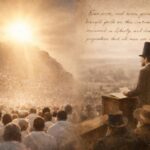
In his Farewell Sermon, the Holy Prophetsa addressed the whole of humanity with words that no leader of the ancient world had ever uttered: that no Arab holds superiority over a non-Arab, nor a non-Arab over an Arab; that no white holds superiority over a black, nor a black over a white. All of mankind, he declared, descended from Adam, and Adam was from dust.[13]
In a single address, the hierarchies of race, tribe and lineage upon which the ancient world had been built were rendered null. The Persian, the African, the Arab and the Byzantine stood, for the first time in history, on an equal ground.
In what would prove to be his final year, the Prophetsa delivered to the world its most universal declaration of brotherhood and equality—one that would illuminate centuries of knowledge yet to come. Islam precisely fulfilled what the prior civilisations had evidently lacked—the theological mandate, the social equality, and the universal brotherhood required for knowledge to truly globalise.
The second Caliph of the Ahmadiyya Muslim Community summarised this transformation in the following words:
“By bringing about the changes with which it is associated, Islam has radically altered man’s knowledge, his thought, his philosophy, his emotions, his religion, politics, morals, his economic concepts and his culture. Under the Islamic influence the world today is a far different world than it would have been otherwise; in fact one can say quite justifiably that Muhammad created a new heaven and a new earth.”[14]
And so, by the time of the Holy Prophetsa’s passing, Islam had hundreds of thousands of followers ready to carry these principles and reforms to the world. A nation that had once stood on the periphery of the known world was now at the centre of its future.
To be continued
Thariq holds a master’s degree in physics from Chandigarh University and is currently pursuing a second master’s degree in Quantum Information Science and Technology from TU Wien (Technical University of Vienna). He is a regular contributor for Light of Islam.
Naseeb is a graduate of Jamia Ahmadiyya Qadian, the Ahmadiyya Institute of Languages and Theology. His final-year thesis explored the relationship between Islam and science, and how Islam contributed to the development of scientific knowledge that would later lay the foundations of modern science and civilisation.
END NOTES
[1] Holy Quran 88:18–21
[2] Holy Quran 3:191
[3] Sunan Ibn Majah, Kitab al-Muqaddima (The Book of the Sunnah), hadith no. 224
[4] Al-Madkhal Ilas-Sunan al-Kubra, Imam Bayhaqi, Hadith no. 324
[5] Ancient Education, Glanville Downey (1957), The Classical Journal, v. 52, no. 8 (May 1957), pp. 337-345
[6] Aristotle, Politics, 1254b 16–21
[7] Writing on the Tablet of the Heart: Origins of Scripture and Literature, David M. Carr, chapter 7, Education and Textuality in the Hellenistic World Egypt and Other Examples of Hellenistic Hybridity, Oxford University Press (2005), pp. 177–200
[8] Gautama Dharmasutra, ch. 12, v. 4–6
[9] Baudhayana Dharmasutra, bk. 2, ch. 1, sec. 2, v. 2
[10] The Cambridge History of Iran: Vol. 3: The Seleucid, Parthian and Sasanian Periods, Ehsan Yarshater (ed.), Cambridge Universeity Press, 2006, pp. xli, 397 (first published 1983)
[11] The Shahnama of Firdausi, English translation by Arthur George Warner & Edmond Warner, Kegan Paul, Trench, Trübner & Co., London, 1923, v. 8, pp. 46–50
[12] The Holy Prophetsa appointed Zaydra to lead several military expeditions. He was also appointed commander-in-chief of the Muslim army at the Battle of Muʾtah—the first major battle against the Byzantine Empire—in which many prominent Companions served under his command.
[13] Sharh al-Aqeeda at-Tahawiyya, Ibn Abi al-Izz, v. 2, p. 510
[14] Real Revolution, Hazrat Mirza Bashiruddin Mahmud Ahmadra, p. 133
4 Comments
Abdulkarareem CG · August 18, 2026 at 4:52 pm
The first revelation that came to the Holy Prophet (sa) from Allah Almighty was ‘Iqra’ ‘Read’. Then why was this not included among the Articles of Faith in Islam?” Kindly explain.
Faheem Siddique · September 30, 2026 at 6:05 pm
“The Holy Prophetsa asked Muslims to travel to the furthest reaches of the world in its pursuit—even unto China,[4] the very edge of the known world at the time”
This Hadith is fabricated and not present in any of the books of Hadith. We should avoid quoting fabricated Hadith.
Nayeem sharif · October 4, 2026 at 3:31 pm
The claim that Islam gradually abolished slavery is without merit when we consider the following points:
1. The Quran does not contain a single verse that denounces slavery or discourages the practice let alone prohibit it.
2. In the other hand the Quran contains plenty of verses that normalises slavery. In all the verses that talk about chastity and marriage the Quran includes slave women along with wives as being allowed for men. The Quran also uses slaves as an example when trying to explain other points. This points to the fact that Quran never really intended for slavery to end.
3. A study of Islamic history shows that slaves continued to be captured by Muslim forces under the prophet Muhammad and the first for khalifas. The number of slaves under Islam only increased as time went on.
4. Slavery continued to exist in the Islamic world till the modern era. Arabia was the last part of the world to outlaw slavery in the 1960s under pressure from western countries. Then how can we claim Islam successfully abolished slavery.
Husam · October 10, 2026 at 7:19 am
1. Islam does prohibit slavery. Quran 8:68 (8:67 according to general numbering) clearly states that it is prohibited to take captives except in the form of prisoners of war. All forms of enslavement that were rampant worldwide in that age were categorically forbidden by Islam with a single unequivocal injuction. The Prophet Muhammad(sa) also said those who enslave a free person will be at war with Allah on the day of judgement. So, this prohibition was absolutely immediate and non-gradual.
Also, Islam, from the start, envisioned a society completely free of slavery. Hence you can find many verses that, while mentioning freeing of slaves as expiation for certain sins, also prescribe other methods of expiation if no slaves are to be found anywhere.
2. All the Quranic injunctions mentioning slaves pertained to already existing slaves on how to treat them and emancipate them. Of course, this step was not done in a single stroke of pen. And the wisdom of not doing so would not be unclear to any student of history. Try to read what happened after the 13th amendment and how a large percent of the freed slaves in America either died or had to go back to their old ‘masters’ only to survive. (Read the book: Sick from Freedom)
Also, many injunctions (like those regarding marriage and chastity) do not mention slaves per se. ‘Milk al-Yameen’, in Quranic terminology, can imply prisoners of war. Islam accords legitimacy to such relationships (when done following the proper process). It places responsibilities upon men on account of those relations and recognises children born from such unions as legitimate. Unlike this, what we see in the modern world is the usurping of the rights of such women and children. History is replete with the stories of women who were humiliated and persecuted for having relations with men of captor force. Their relationships had no legitimacy in the sight of captor country, while their own nation also disowned them. Read about femmes tondues, moffenmeid, tyskerjenter, krigsbarn, feltmadrasser etc.
3. Absolutely wrong and baseless. The Holy Prophet(sa) and his Caliphs did not enslave a single person in their lives. As already mentioned, this practice was strongly censured by the Prophet(sa). What they actually had were prisoners of war, which is legal even in this day and age. However, also try to educate yourself on how those war captives were treated by Muslims as per the Prophet(sa)’s instructions. Even the articles of Geneva Conventions cannot match the morality of Islam in this matter. On the other hand, slaves were systematically being freed under the Islamic rule. The Prophet(sa) had no slaves with him when he died, so were the Caliphs. During their lives, they actually freed a large number of slaves.
4. This is correct, and the reason for this is that the later Islamic regimes deviated from the actual teachings of Islam. They started enslaving people from other countries, which were clearly forbidden by the Holy Prophet(sa). Hence, their practices cannot be attributed to the teachings of Islam, let alone blame it. There are many Muslims who consume alcohol, commit adultery, and engage in other non-Islamic practices. Would you blame Islam for that?