















AMEER ZAEEN, KERALA
A few weeks ago, my friend and I had a long conversation about the changing norms, values, and culture of our society. Since he is a student of society and culture, our discussion delved into how human behaviour has transformed in the past decade or so, especially since the early 2010s, followed by an even bigger shift after the COVID-19 pandemic.
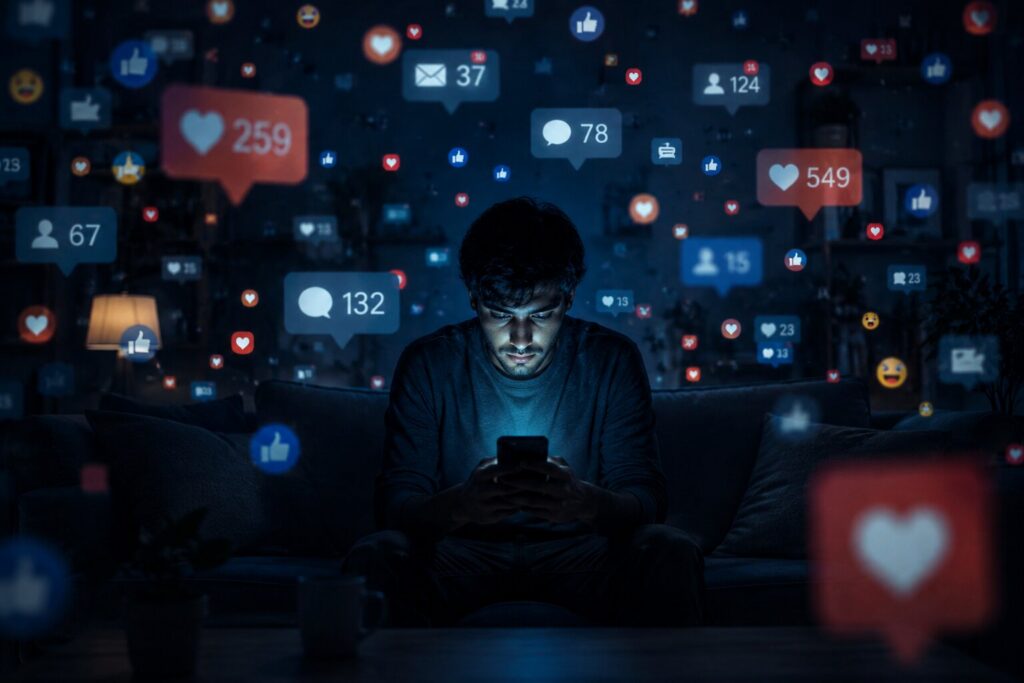
The rise of smartphones, social media platforms, and short-form content has created a new world around us. It is no longer just technology; it has become a form of social engineering that influences how we think, what we desire, how we measure success, and even how we see ourselves.
The most striking aspect of this shift is that we are not simply observing the change from the outside but have become a part of this transformation.
The minds we are becoming
I remember when TikTok songs and trends started becoming popular around 2020. Initially, I strongly disliked those repetitive trending sounds. But over time, with constant exposure, my mind gradually became filled with fragments of such songs replaying throughout the day.
This reflects how these platforms, while seeming to merely connect or entertain us, actually shape our thoughts, habits, and emotional responses, without us even realising it.
The fact is, the human brain is wired to respond strongly to quick rewards and pleasurable experiences. Social media precisely exploits these tendencies by constantly activating our brain’s reward system. Every swipe, notification, like, or short video offers a brief sense of reward, encouraging us to seek more and keeping us caught in a cycle of endless consumption.
In the midst of this continuous stream of instant excitement and stimulation, staying present in real life becomes increasingly difficult.
The performance of everyday life
Another major consequence of the rise of social media is the decline of privacy—a value that was once accorded immense significance in human life.
Social media has created a world where the line that differentiates between what is public and what is personal does not simply exist. Hence, whatever a person does is not just for themselves but also to garner approval from an invisible audience that exists inside their heads.
Today, people travel less to experience places and more to show others that they have been there. They eat food less to enjoy the experience and more to present it to others. While weddings, in the past, were primarily about the union of two people, their families, and the emotions of the occasion, today, they have become content for an online audience. Pre-wedding shoots, wedding reels, honeymoon updates, and constant sharing of personal moments have become increasingly common. Even the most intimate experience of expecting and having children has turned into consumable content for complete strangers, with many parents recording and sharing every moment of their child’s life online.
Simply put, moments that were once preserved as cherished personal memories have become public performances.
Contentment and presence: The antidotes to digital overload
Although the most immediate consequence of this culture of constant sharing is the erosion of privacy, it also carries deeper psychological and social implications.
While we constantly share our personal lives online, we do so before an audience carrying their own struggles, failures, and emotional battles. What is displayed on social media is usually only the best-edited version of life, yet many compare this constructed reality with their own. The result is often unnecessary pressure, jealousy, insecurity, and dissatisfaction with their own lives.
Likewise, another strange consequence is that while we are becoming more connected digitally, we are, at the same time, becoming increasingly disconnected from real life. We have become so preoccupied with documenting and sharing every moment that we often fail to fully experience it.
Perhaps the answer to both these problems lies in reclaiming the value of privacy and finding contentment in what life offers—in understanding that a private life is not a boring life but a peaceful one; that not everything beautiful in life needs an audience, but presence; that not every achievement needs approval, nor every happiness witnesses; and that some of life’s most precious moments are worth protecting simply because they are our own.
The quiet freedom of privacy
After the conversation with my friend, I asked myself a simple question: how did I want my life to be?
The answer came without much thought.
I want my life to be private. I do not want to turn my happiness into content for strangers. I do not want to display my marriage, my family, or my personal moments for the world to judge, compare, or consume. Some things are too precious to be placed in a public marketplace.
A family dinner where conversations matter more than capturing the perfect photograph, or a marriage where two people can love, grow, laugh, and create memories without an online audience watching every step, may be the greatest form of freedom a person can experience in this virtual age.
In a world where everyone is in a constant race to showcase their lives, choosing privacy becomes the ultimate act of protecting happiness.
Ameer is a graduate in History and runs an interior design firm. He is particularly interested in exploring contemporary social issues through an Islamic perspective, with a particular focus on the intellectual, moral, and social challenges facing today’s youth. He currently serves as the National Deputy Secretary for Financial Affairs of Khuddamul Ahmadiyya (the Young Men’s Auxiliary of the Ahmadiyya Muslim Community).
1 Comment
Thalha Mp · August 6, 2026 at 4:45 pm
Timely article! It is true that we have forgotten the art of living with ourselves amidst all these social media distractions.