ARTICLES

In moments when words feel inadequate and answers seem distant, Khilafat offers something deeper: the reassurance of being heard, remembered, and held in prayer.
During a period of spiritual distance, a simple gift from the Khalifa became a symbol of purpose, trust, and a lifelong commitment to serving faith through words.
For a believer, Khilafat is a source of comfort and strength, offering peace through prayers, guidance, and the assurance of being remembered.
What began as a child’s attempt to offer salam became a lifelong reminder that divine love finds us long before we know we are lost.
When the world turned us away, the prayers of the Khalifa offered comfort, resilience, and the strength to persevere through every trial.
In a moment of uncertainty, the Khalifa’s prayers and trust offered a powerful lesson in freedom, faith, and the dignity of choice.
More precious than gold itself, the letters from the Khalifa carried prayers, comfort, and a spiritual connection that strengthened faith at every stage of life.
When Ibrahim(as) raised the knife, it was not the animal that was being tested. It was the man holding it. Eid al-Adha is a reminder that sacrifice is not meant to end with the ritual, but to begin with it.
Travelling to meet the Khalifa was a journey of priceless value for our family, where worldly concerns became insignificant before the weight of spiritual blessing.
In an age fractured by division, confusion, and spiritual uncertainty, Khilafat stands as Islam’s enduring institution of unity—offering moral clarity, divine guidance, and a living connection between humanity and God.
Is pursuing worldly provisions the sole purpose of our lives, or is there any greater meaning to our existence?
Critics often employ contextomy to misrepresent the views of the Promised Messiah(as). Here we refute a false allegation of misogyny raised against him.
Is it true that Muslims are permitted to have conjugal relations with female war captives? The Worldwide Head of the Ahmadiyya Muslim Community gives an insightful explanation.
The Ahmadiyya Caliph extends the message to the world that true happiness will be attained when mankind begins to recognise human values, and when hatred turns to love.
Islamic teachings emphasise that true patriotism is reflected in actions that contribute to the nation’s prosperity and harmony.
The Ahmadiyya Muslim Community, being a religious and non-political organisation, has always advocated for peace. Unfortunately, a lack of historical awareness has led some to unjustly accuse this Community of being responsible for the partition of India.
We are honoured to publish the letter written by His Holiness, Hazrat Mirza Masroor Ahmad(aba), the Worldwide Head of the Ahmadiyya Muslim Community, to the honourable Prime Minister of India, Mr Narendra Modi, during the Covid-19 pandemic.
Taqiyya, a term unknown to 99% of Muslims has now become the tool of Islamophobes to evade intelligent debate by labelling all Muslims as liars.
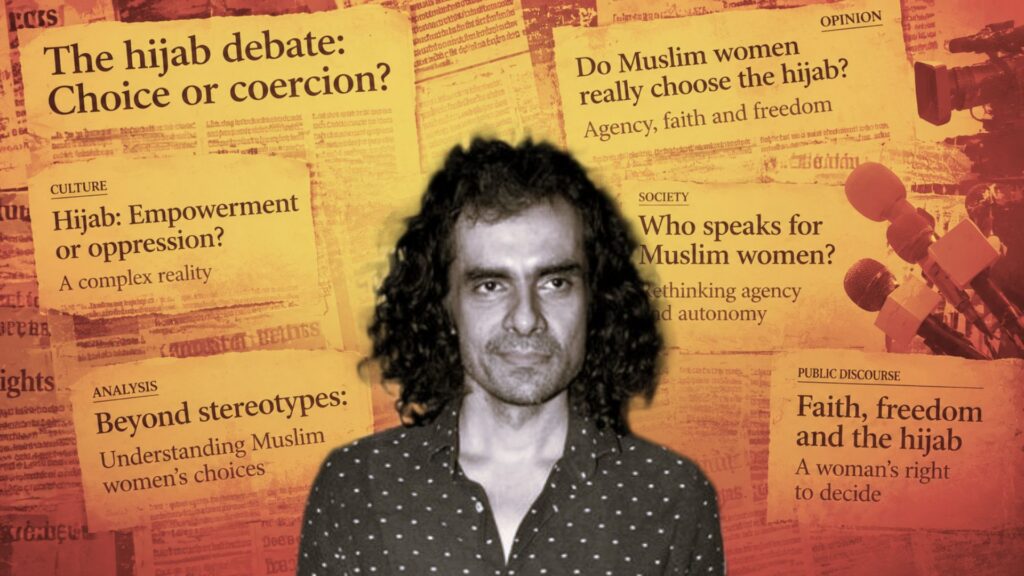
Women’s freedom to dress has been upheld by today’s society. But, when it comes to Muslim women choosing to wear Hijab, the standards are different.
Critics of Islam often claim that Hazrat Aisha(ra) was not mature when Prophet Muhammad(sa) married her. However, nothing can be further from the truth.