Fasting is obligatory, although the sick, the traveller, and those unable to bear it are exempt. Those unaware of these principles often fall into excess or neglect regarding the obligations of Ramadan, forgetting that religion is not a burden but a means of growth.
Ramadan is not merely a ritual of abstinence, but a sacred season of transformation. In its atmosphere of worship, restraint, and renewal lies a unique opportunity to reform the self, break old habits, and begin anew.
True security lies not in fear, but in faith—strengthening one’s bond with Allah, continuing to plan with wisdom, and striving with hope regardless of global uncertainty.
Do we worship what we fear? It is commonly held that belief in God emerged gradually as a result of humanity’s awe of natural forces. However, a study of history reveals this theory to be so devoid of evidence that it amounts to nothing but the speculation of atheistic thinkers.
Why would a good God allow suffering? If He is all-powerful and all-merciful, why does He not rid the world of misery? Isn’t a truly painless world the paradise we long for—or would such a reality, paradoxically, be nightmarish?
It is commonly argued that science and faith cannot coexist. However, some of the greatest scientific minds—those who have viewed the world from a vantage point experienced by only a handful in human history—beg to differ.
Those who accept beliefs without investigation follow error and hearsay, whereas true believers base their faith on proof, reasoning and certain knowledge.
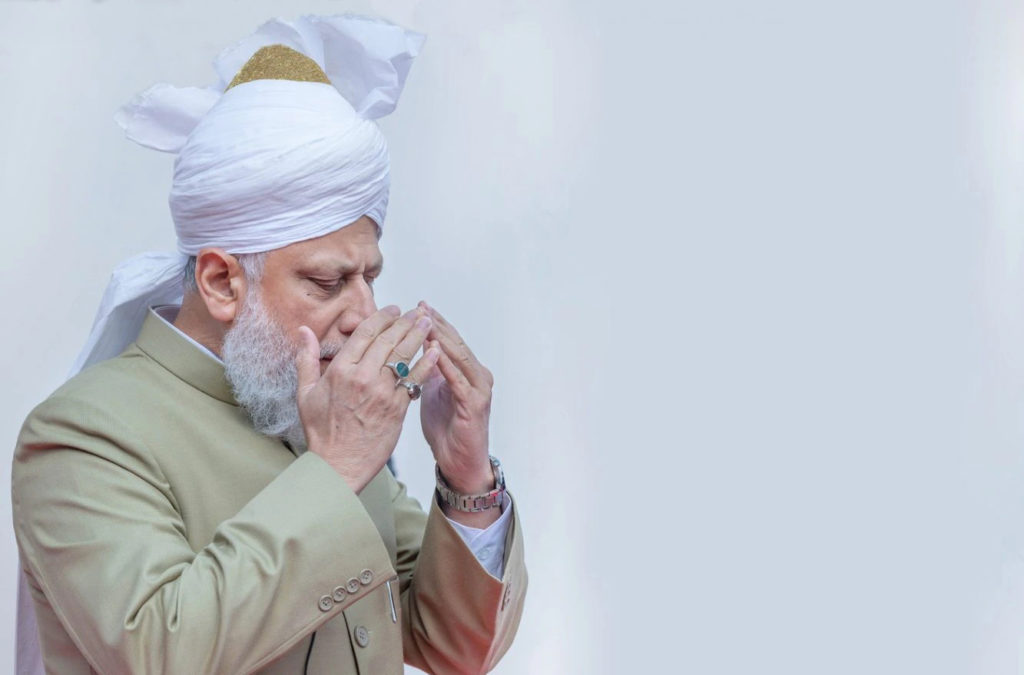
As the new year begins, the Ahmadiyya Caliph appeals for prayers for the progress of the Community, the release of imprisoned Ahmadis, the deliverance of oppressed people worldwide, and the establishment of peace across the globe.
Across history, there have been many attempts to end slavery. Yet, all too often, emancipation came at the cost of human lives or remained confined to paper, thus falling short of securing true human dignity.
During a period of spiritual distance, a simple gift from the Khalifa became a symbol of purpose, trust, and a lifelong commitment to serving faith through words.
More precious than gold itself, the letters from the Khalifa carried prayers, comfort, and a spiritual connection that strengthened faith at every stage of life.
When Ibrahim(as) raised the knife, it was not the animal that was being tested. It was the man holding it. Eid al-Adha is a reminder that sacrifice is not meant to end with the ritual, but to begin with it.
Travelling to meet the Khalifa was a journey of priceless value for our family, where worldly concerns became insignificant before the weight of spiritual blessing.
In an age fractured by division, confusion, and spiritual uncertainty, Khilafat stands as Islam’s enduring institution of unity—offering moral clarity, divine guidance, and a living connection between humanity and God.
Debates surrounding animal sacrifice intensify during Eid al-Adha. However such discussions often fail to recognise that true sacrifice in Islam extends far beyond the material ritual, centring on righteousness and spiritual reflection.