ARTICLES

Panic Attacks are sudden waves of intense fear that can feel overwhelming, but with awareness and the right strategies, they are manageable and treatable.
A father’s personal journey, reflecting on how the Prophetic teachings celebrate daughters as blessings, not burdens, and how his influence—resonating through time—safeguards against such societal prejudices.
Did Prophet Noah’s age really exceed normal human lifespan? Or does the ‘950 years’ represent the period of his law and dispensation? What deeper message does the Quran convey by mentioning this period?
Since the rise of New Atheism, the demand to prove God empirically has grown louder. Nevertheless, this insistence is nothing more than an old, rejected argument—repackaged and presented as new.
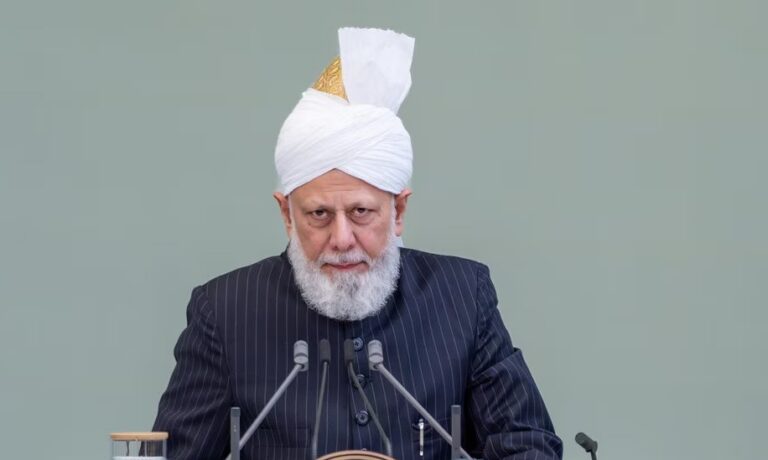
Amid global turmoil and escalating injustice against Palestinians, the Ahmadiyya Caliph calls for prayers and urges leaders to reform, embrace justice, and work towards lasting peace.
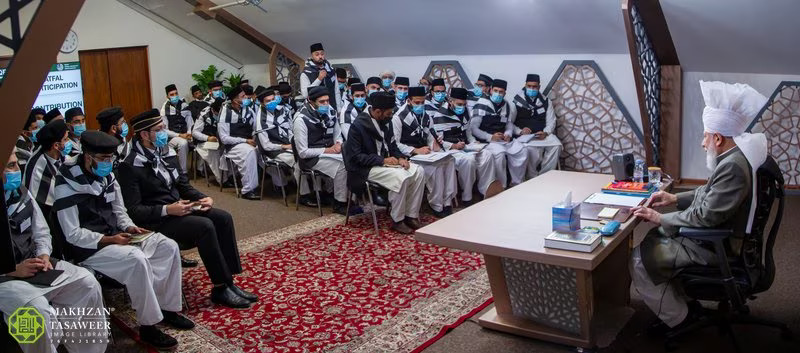
True service lies in using one’s skills for humanity. The Ahmadiyya Caliph reminds architects that true success is found in service—designing affordable homes and hospitals that uplift the poor and strengthen the Community’s humanitarian mission.
Today marks 80 years since the atomic bombings of Hiroshima and Nagasaki, and the world seems to be standing on the brink of another global conflict. Has time erased our memories?
Obsessive-Compulsive Disorder (OCD) is a complex but treatable mental health condition marked by intrusive thoughts and repetitive behaviours. Early recognition and timely intervention are key to managing symptoms and improving quality of life.
Terrorism thrives where justice and public welfare are neglected. The Ahmadiyya Caliph urges leaders to serve the people and build economic stability to prevent extremist influence and preserve national peace.
In an era where women’s voices were often silenced, Hazrat Aishara spoke with wisdom and authority, exemplifying the rights women held in Islam from its outset.
World Head of the Ahmadiyya Muslim Community explains how Islamic teachings hold the key to establishing true and lasting peace at all levels.
The virtual world of the internet is connected with the actual world in both ways. It reflects as well as influences how humans behave in the real world.
Islam envisions the world in the form of a pluralistic ecosystem. Hence, enacting shariah law becomes impossible even in countries with Muslim majorities, let alone the multireligious nations and societies.
In around 770 AD, an embassy from India, including an astronomer, visited the then Abbasid Caliph Al-Mansur in Baghdad. The meeting was to open up an avenue for a fruitful interaction between India and the Arab world.
Remembering Karbala holds special significance for Muslims. But, is recreating the physical torture Imam Hussain (ra) and his followers went through the true way of commemoration?
A drive through rush hour traffic, a bad day at the office or reading irate tweets on social media can all induce our anger. As the incontinent expression of rage can have damaging outcomes, we ought to control our anger in such situations.
Conflict being an inevitable characteristic of human society, a course to peace can only be charted when man imbibes the noblest of moral virtues.
There is a growing trend of portraying Muslim women practising hijab as ‘oppressed’ while their voices that claim otherwise are purposefully undermined.
No matter how challenging the circumstances and how severe the hardships are, those who are determined to strive for the cause of God never retreat.
Ahmadiyya Caliph explains how water stress is driving terrorism and draws the attention of world leaders towards curbing the issue.