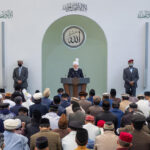
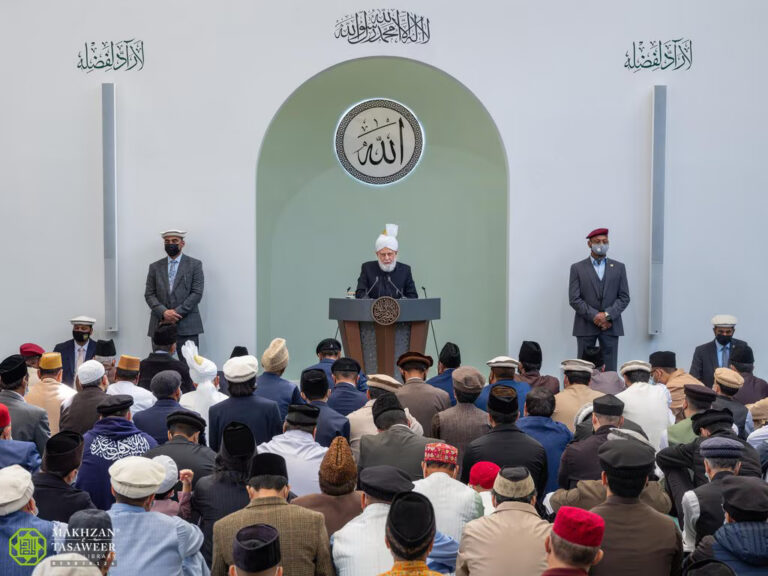
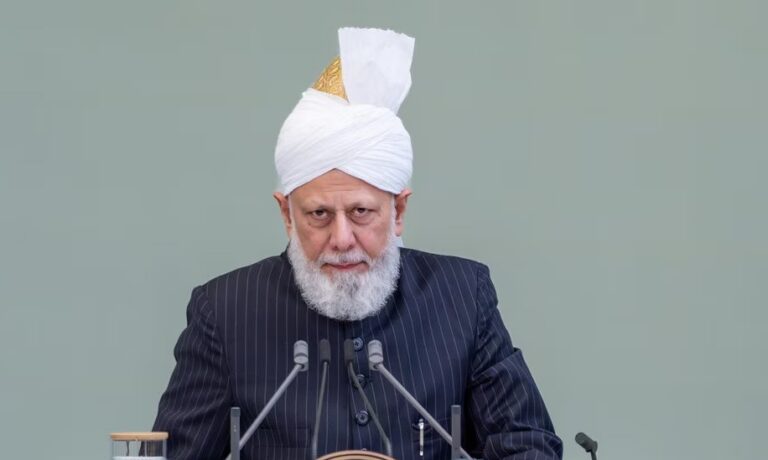
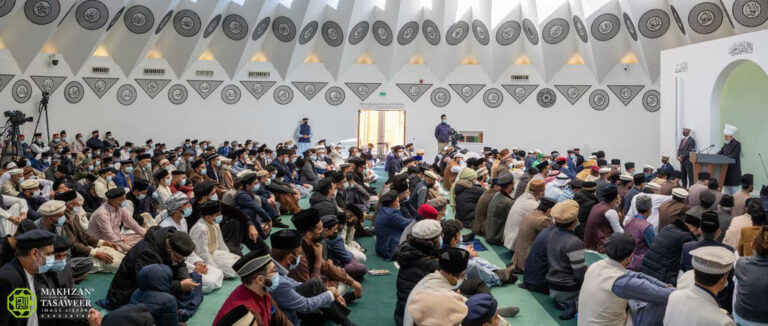
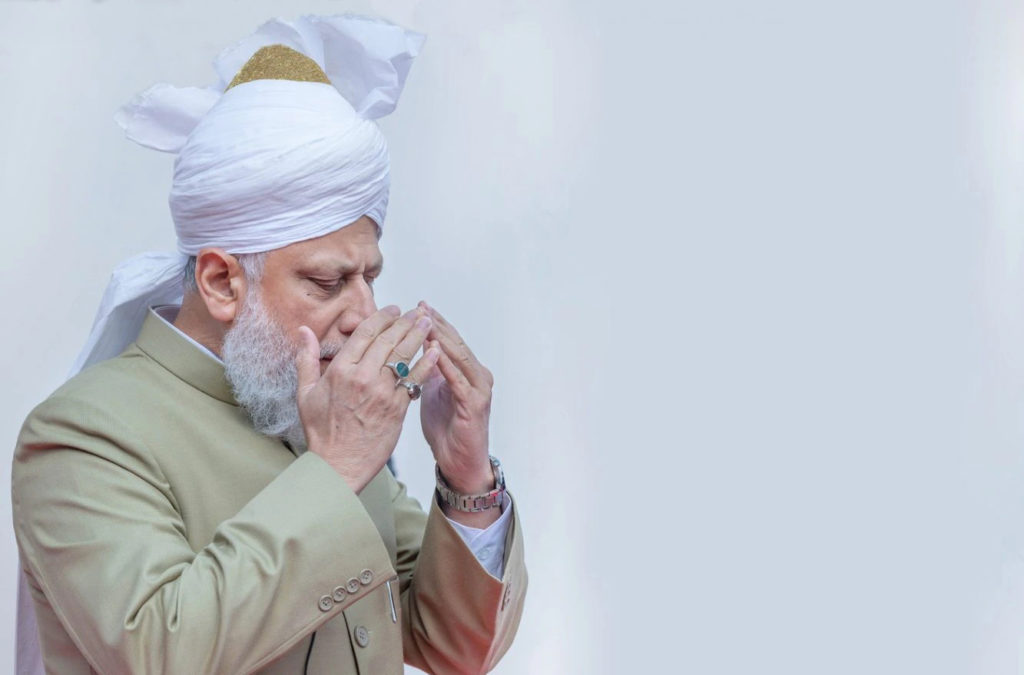
When the world turned us away, the prayers of the Khalifa offered comfort, resilience, and the strength to persevere through every trial.
In a moment of uncertainty, the Khalifa’s prayers and trust offered a powerful lesson in freedom, faith, and the dignity of choice.
More precious than gold itself, the letters from the Khalifa carried prayers, comfort, and a spiritual connection that strengthened faith at every stage of life.
When Ibrahim(as) raised the knife, it was not the animal that was being tested. It was the man holding it. Eid al-Adha is a reminder that sacrifice is not meant to end with the ritual, but to begin with it.
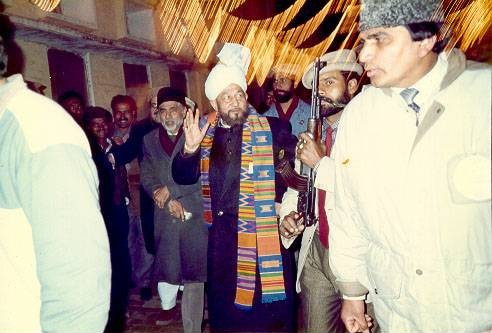
Travelling to meet the Khalifa was a journey of priceless value for our family, where worldly concerns became insignificant before the weight of spiritual blessing.
In an age fractured by division, confusion, and spiritual uncertainty, Khilafat stands as Islam’s enduring institution of unity—offering moral clarity, divine guidance, and a living connection between humanity and God.
Debates surrounding animal sacrifice intensify during Eid al-Adha. However such discussions often fail to recognise that true sacrifice in Islam extends far beyond the material ritual, centring on righteousness and spiritual reflection.
While the modern world still debates the right of women to education, Islam, over fourteen centuries ago, revolutionised women’s rights by declaring that the acquisition of knowledge is—not just a right—but a responsibility of women.
What begins as a few minutes of harmless scrolling often turns into mental exhaustion and distraction. While disconnecting from technology is not a realistic option in today’s world, we can still choose to use it wisely.
As reliance on artificial intelligence increases, how can patients be guided to place their trust in doctors’ informed medical judgment rather than in artificial intelligence?
The Ahmadiyya Khalifa urges Ahmadi Muslims to engage in prayers and preparedness amid escalating global tensions.
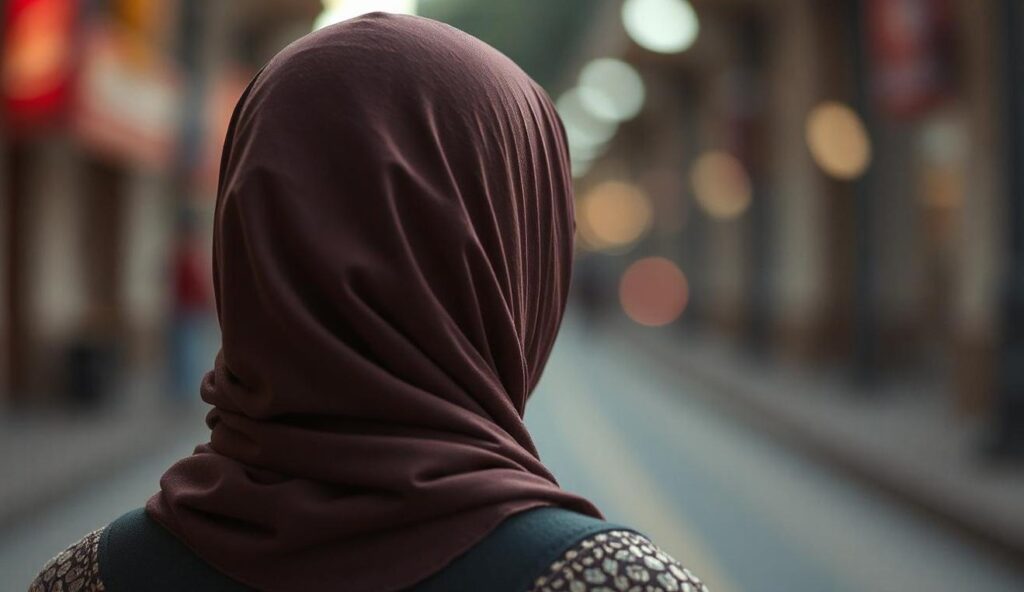
Opinions often surface branding the hijab as a symbol of oppression. Here, we respond to a recent Newslaundry article, challenging the narrative that Muslim women require ‘liberation’ from their choice to wear the veil.
If God is an epitome of love, why should we fear Him? The Ahmadiyya Khalifa explains the Islamic concept of righteousness, highlighting how true love inspires a fear of displeasing the beloved.
Islamic teachings provide essential principles for living in a society, addressing the political, social, economic, cultural, and religious aspects of human life.
Postpartum depression is a common yet often overlooked challenge that many new mothers face. Understanding its impact and finding effective coping strategies are essential for both maternal well-being and healthy parenting.
Ahmadiyya Khalifa explains the Islamic concept of religious evolution which occurred in parallel with the cognitive and social development of man.
While Akhtar blatantly characterises all religious people as mentally ill, his statements reveal that he is suffering from the very delusion he seeks to find in others.
Amidst the polarised debates that either advocate for or entirely reject abortion, Islam offers a balanced and logical perspective, respecting the rights of women and the sanctity of potential life.
The Ahmadiyya Khalifa explains how important it is for parents, in today’s digital age, to monitor the programmes their children watch and ensure they do not have excessive screen time.
Contrary to the common belief that Adam(as) was forbidden to approach a physical tree, a study of the Quranic verses reveals that the command addressed a concept of much greater significance.