ARTICLES
Women’s mental health is often overlooked, yet understanding the challenges women face and adopting coping strategies can enhance their emotional strength. On International Women’s Day, let’s prioritise women’s mental well-being.
The physical endeavours one undertakes during Ramadan must also spark a spiritual transformation in them, thus merging the two heats reflected in the very name of the month.
Ahmadiyya Khalifa explains the harmful effects of steroids on the body over time and emphasises the importance of building strength naturally.
Satan deceived Hazrat Adam(as) by disguising his true intentions, misleading him into an error despite God’s warning. The Holy Quran reveals how this deception unfolded.
The Ahmadiyya Khalifa urges prayers amidst dire global circumstances, emphasising peace worldwide, justice for Palestinians, and unity in the Muslim world.
The Doomsday Clock ticks closer to midnight, sounding the alarm on a global catastrophe, and echoing the warnings of Ahmadiyya Khalifa, who has been cautioning against an impending disaster for two decades.
Often misunderstood as a restriction, purdah is, in reality, a source of strength and identity. The article explores the author’s journey of resilience, proving that true empowerment comes from within—not from societal expectations.
Many so-called ‘harmless’ ways to release anger—like yelling or hitting objects—are often suggested, but do they really help? Research suggests otherwise.
The Ahmadiyya Khalifa explains how justice is an essential prerequisite for Shariah law, and how imposing it forcefully goes against the principles of Islam.
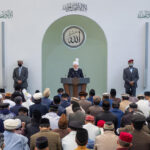
Ahmadiyya Khalifa addresses the annual convention of the Community in India and outlines the love the Promised Messiah(as) had for Prophet Muhammad(sa).
During a period of spiritual distance, a simple gift from the Khalifa became a symbol of purpose, trust, and a lifelong commitment to serving faith through words.
For a believer, Khilafat is a source of comfort and strength, offering peace through prayers, guidance, and the assurance of being remembered.
What began as a child’s attempt to offer salam became a lifelong reminder that divine love finds us long before we know we are lost.
When the world turned us away, the prayers of the Khalifa offered comfort, resilience, and the strength to persevere through every trial.
In a moment of uncertainty, the Khalifa’s prayers and trust offered a powerful lesson in freedom, faith, and the dignity of choice.
More precious than gold itself, the letters from the Khalifa carried prayers, comfort, and a spiritual connection that strengthened faith at every stage of life.
When Ibrahim(as) raised the knife, it was not the animal that was being tested. It was the man holding it. Eid al-Adha is a reminder that sacrifice is not meant to end with the ritual, but to begin with it.
Travelling to meet the Khalifa was a journey of priceless value for our family, where worldly concerns became insignificant before the weight of spiritual blessing.
In an age fractured by division, confusion, and spiritual uncertainty, Khilafat stands as Islam’s enduring institution of unity—offering moral clarity, divine guidance, and a living connection between humanity and God.
Debates surrounding animal sacrifice intensify during Eid al-Adha. However such discussions often fail to recognise that true sacrifice in Islam extends far beyond the material ritual, centring on righteousness and spiritual reflection.